Choosing the right best titanium fishing pliers means weighing one fundamental trade-off that shapes nearly every decision in this category: lightweight titanium construction versus durability and cutting power in stainless steel. Both materials resist corrosion, but they handle weight, cost, and cutting performance differently depending on how you fish and what lines you use most. This guide covers 5 options from KastKing, GOMEXUS, HOOK-EZEFISHINGQUICKKNOTTOOL, dancosportsinc across that spectrum, so you can match the tool to your actual fishing style rather than chase specs that don’t matter to your setup.
The confusion usually starts with material claims. Some pliers boast full-titanium bodies, while others mix titanium jaws with aluminum or use premium stainless steel instead. Each approach carries real trade-offs in weight, grip, line-cutting ability, and long-term maintenance, especially in harsh saltwater conditions where corrosion becomes a dollar cost, not just an inconvenience.
5 Best Titanium Fishing Pliers
Below are 5 selected picks ranked by overall customer rating and value. As you compare them, focus on three areas: the primary material and its weight impact on all-day fishing, the cutting system and whether it suits the line types you use, and the weight-to-strength ratio at your budget level. Here’s what our analysis found across this group.

KastKing Ti-Forge Titanium Fishing Pliers: Lightweight, Corrosion-Resistant Multi-Tool
Expand details⌄
Detailed Review
Out of the sheath, the Ti-Forge is noticeably compact and balanced. The titanium jaws catch light differently than typical stainless, and the anodized aluminum body feels precision-machined rather than stamped. The weight immediately stands out. At 3.5 oz, it won't fatigue your hand or anchor down a tackle bag the way heavier stainless pliers do. The ergonomic handles open and close smoothly with the internal coil spring, and the manual thumb-lock is essential if you're bouncing around in a boat or wading.
On the water, the dual-tip jaws grip and manipulate split rings reliably, and the tungsten-carbide cutters deliver clean, flush cuts through monofilament, fluorocarbon, and braid without crushing them. Hook removal works as advertised on the curved jaw, and the tool handles crimping split shot and leader-building tasks with precision. The corrosion resistance truly matters in saltwater or brackish conditions; titanium and anodized aluminum won't rust or degrade the way bare steel would. The included sheath keeps the pliers accessible but secure whether clipped to a belt, cockpit rail, or kayak seat, and the coiled lanyard prevents accidental drops.
Compared to typical multi-tool fishing pliers, the Ti-Forge trades durability questions for weight savings and material intelligence. It doesn't try to be a hammer or knife; it zeroes in on what anglers actually need from a plier. The blade is user-replaceable, which extends tool life but also adds a small long-term cost. Most anglers jumping from a cheaper or heavier stainless model will feel the difference immediately in comfort and corrosion performance, though the 12-review sample size means real-world durability over years remains partially unproven.
This plier suits anyone who values portability and corrosion resistance, especially saltwater sight-casters, kayak anglers, and waders who dislike carry-weight. Freshwater anglers in neutral or acidic environments will also appreciate the lightweight design, though the anti-corrosion materials become less critical. If you need a general-purpose multi-tool or rarely leave freshwater, a heavier all-steel option might serve you just as well. But if you're willing to commit to fishing-specific tasks and want a tool that handles salt spray, weathering, and repeated use without declining performance, the Ti-Forge delivers genuine value in a package you'll actually want to carry.
Saltwater Care and Blade Maintenance
Titanium and anodized aluminum resist corrosion far better than bare steel, but saltwater anglers should still rinse the pliers with fresh water after each session, especially around the hinge and inside the jaw crevices where salt deposits accumulate. A light wipe with a dry cloth and occasional light oil on the spring will keep them snapping open reliably for years.
The tungsten-carbide blades stay sharp longer than standard steel but will eventually dull after cutting hundreds of feet of braid and monofilament. Rather than waiting for crushing failures, replace the blades as soon as you notice ragged or unclean cuts. User-replaceable blades mean you're not discarding the entire tool, just refreshing its cutting edge.
Store the pliers in the included sheath in a cool, dry space when not in use. The coiled lanyard prevents loss on the water but can tangle; unwind it fully or clip it to your bag to avoid frustration during active fishing. This simple routine will keep the Ti-Forge performing like a new tool through multiple seasons of use.

GOMEXUS Titanium Fishing Pliers for Saltwater with Replaceable Cutters
Expand details⌄
Detailed Review
From the moment you hold these pliers, the material choice becomes obvious. The full titanium build feels substantial yet surprisingly light, and every component from the jaws and spring to the screws reflects a commitment to avoiding rust entirely. The 150-gram weight is genuinely noticeable in hand as well balanced and responsive, which matters when you're working for hours on a boat or shoreline where fatigue compounds mistakes.
The side-mounted tungsten carbide cutters handle monofilament, fluorocarbon, and braided line cleanly without requiring the brute force that steel bliers demand. This matters in saltwater fishing where precision and repeated cuts are part of the everyday work. The fact that the blades are replaceable extends the tool's useful life rather than forcing you to replace the entire plier when the cutters dull, a practical consideration for gear you intend to keep for years. The included Kevlar lanyard with coiled design keeps the pliers tethered to your person or gear, particularly valuable on moving boats or in rough conditions where losing a tool means losing time and money.
Compared to alternatives in this category, titanium pliers occupy a different tier than standard steel options. The corrosion resistance in saltwater environments is genuinely meaningful over time, especially if you fish regularly and rinse casually rather than meticulously. The choice between split-ring and non-split-ring models lets you match the tool to your actual workflow, whether you swap hooks frequently or prefer a simpler design. The ergonomic balance suggests these are built for sustained use rather than occasional trips.
This plier is best suited for saltwater and inshore anglers who fish enough to justify durable gear and understand that lightweight, corrosion-resistant tools pay dividends over seasons of use. If you fish freshwater only or rarely, or if you're building your first tackle box on a tight budget, standard pliers may serve you fine. But if you're working saltwater regularly and want tools that last without degrading to rust, this model aligns with that expectation.
Caring for Titanium Pliers and Replacing Cutters
Despite titanium's corrosion resistance, rinsing your pliers with fresh water after saltwater use remains good practice and extends the life of the spring and joint mechanisms. Salt spray settles in crevices and can still accumulate, so a quick rinse and dry maintains smooth operation. Store them in the included leather sheath in a dry location to minimize environmental exposure between trips.
Replaceable tungsten carbide blades are your long-term investment in this tool. When you notice the cutters becoming dull or requiring more pressure to cut line cleanly, order replacement blades rather than accepting degraded performance. The pliers themselves should outlast multiple blade replacements if you keep the joint oiled and the lanyard intact, making this a more economical choice than discarding the entire tool.
HOOK-EZE Titanium Fishing Pliers 4.1" Multi-Tool with Tungsten Cutters
Expand details⌄
Detailed Review
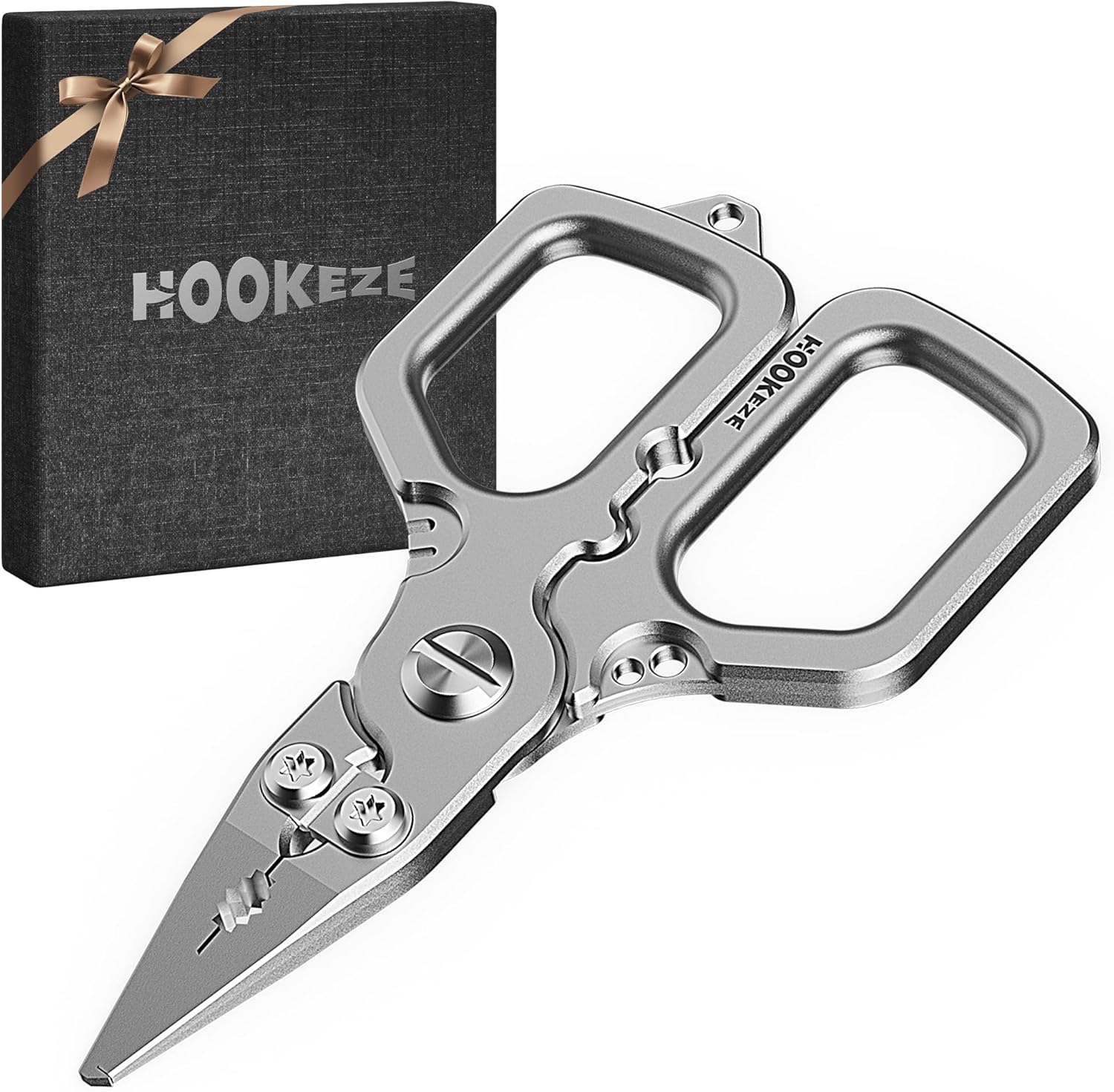
The pliers arrive in a compact package that immediately conveys durability. The aerospace-grade titanium body feels solid despite weighing only 0.1 pounds, and the 4.1-inch length makes one-handed operation practical from a boat or shoreline. The material choice is deliberate for saltwater use, where rust and corrosion typically break down standard steel tools within a season. The hooked head looks proportional to the frame, and the included lanyard with carabiner addresses a real frustration for anglers: dropping tools overboard or into the water.
In typical use, the tungsten carbide cutter handles the core job of slicing through mono, fluorocarbon, and braided line. The crimp grooves add versatility for tackle adjustments. However, the compact size does create a trade-off: smaller tools naturally generate less mechanical advantage, so cutting thick braided line or heavy mono may require more hand strength than traditional full-sized pliers. The hooked head for hook removal is a legitimate feature for saltwater fishing, where barbs and snagging are routine challenges.
Compared to standard steel pliers, this tool skews toward the specialty market. Titanium models typically cost more than conventional options but justify the investment in saltwater environments where frequent corrosion replacement becomes expensive. The multi-function design consolidates three separate tools into one, which appeals to anglers who pack light or fish from kayaks. Competitors in this niche usually offer similar material benefits but fewer integrated functions or bulkier form factors.
This tool suits anglers who fish saltwater regularly, value equipment durability, and appreciate minimalist gear design. It's particularly well-matched for kayak and boat fishing where weight and space matter, and for anyone frustrated by corrosion damage to previous equipment. Less ideal for freshwater-only anglers or those who prefer maximum leverage and hand control in a traditional grip.
Saltwater Care and Maintenance
Although titanium resists corrosion far better than carbon steel, regular rinsing with fresh water after saltwater use extends the tool's lifespan and keeps moving parts responsive. The lanyard and carabiner can accumulate salt residue, so they benefit from the same fresh-water rinse. Store in a dry place, ideally in a tackle box or pouch where they won't rattle against other metal tools.
The tungsten carbide cutter edge is harder than the titanium body, so avoid using the tool on materials it was not designed for, such as wire or hooks significantly larger than typical fishing line. Keeping the blades dry and away from moisture between trips prevents any potential microscopic corrosion at the junction of different metals.

KastKing Speed Demon Pro 7.5" Split Ring Fishing Pliers | Saltwater Stainless Steel
Expand details⌄
Detailed Review
Out of the box, these pliers feel purposefully built. The 420 stainless steel body is noticeably heavier than aluminum equivalents, which translates to a solid, substantial feel in hand. The SuperPolymer grip wrapping is comfortable and doesn't feel slippery, even when wet. The split ring nose is specifically designed to open and close around split rings and small objects, differentiating this model from the straight nose variant. Spring-loaded jaws mean you don't need to squeeze constantly, a thoughtful feature for extended use that reduces hand fatigue.
The real utility emerges in actual fishing scenarios. The tungsten carbide side cutters cut through mono, fluorocarbon, and braided line cleanly without crushing or fraying, and the raised surface behind the blade keeps your line in the cutting zone so you don't lose it below the jaws. The serrated jaws grip hooks of various sizes securely for safe removal, while the integrated crimping slots and wire cutter handle leader building and split shot attachment quickly. For saltwater use specifically, the polymer coating over the stainless steel provides an extra layer against corrosion, addressing the real-world problem of rust forming on exposed metal in harsh environments. The included molded sheath with belt clip and coiled lanyard keeps the tool accessible and prevents loss, which matters when you're on a boat or along slippery jetties.
Compared to basic aluminum pliers, the 420 stainless steel construction and tungsten carbide cutters represent meaningful upgrades that justify the price point. The multi-function design eliminates the need to carry separate tools for cutting, crimping, and hook removal. While some specialty pliers might focus on a single task with more precision, this generalist approach covers most productive fishing scenarios without excess weight or complexity. The spring-loaded jaw mechanism is faster to operate than hand-cranked or non-sprung pliers, especially over a long fishing day.
These pliers work best for anglers who fish both saltwater and freshwater throughout the year and value having one reliable multi-purpose tool rather than switching between specialized instruments. They're particularly strong for anyone who builds leaders, uses split rings frequently, or moves between different fishing locations and line types. Casual shore anglers and boat fishers will find them straightforward to use, though specialized linemen or fly fishers with very specific needs might prefer purpose-built alternatives.
Maintaining Your Pliers in Saltwater Conditions
Although these pliers are designed with saltwater corrosion resistance through the polymer coating and 420 stainless steel, routine freshwater rinsing after saltwater use is still important. Salt deposits can accumulate in the spring mechanism and jaw joints, so a quick rinse and pat dry extends the life of the tool considerably. The polymer coating protects the base metal, but small nicks or scratches will expose the stainless steel underneath, making local rinsing especially valuable in those spots.
The spring-loaded mechanism benefits from occasional lubrication with a light oil or silicone spray, particularly if you notice the jaws opening or closing less freely after extended use. Apply sparingly around the pivot point and wipe away excess to avoid attracting salt deposits or sand. Store the pliers in the included molded sheath between trips to minimize direct exposure to humid or salty air. The coiled lanyard attachment point should be checked periodically to ensure it remains secure, as constant movement against boat railings or tackle bags can eventually wear the anchor point.
Danco 7.5" Stainless Steel Fishing Pliers with Tungsten Carbide Cutters
Expand details⌄
Detailed Review
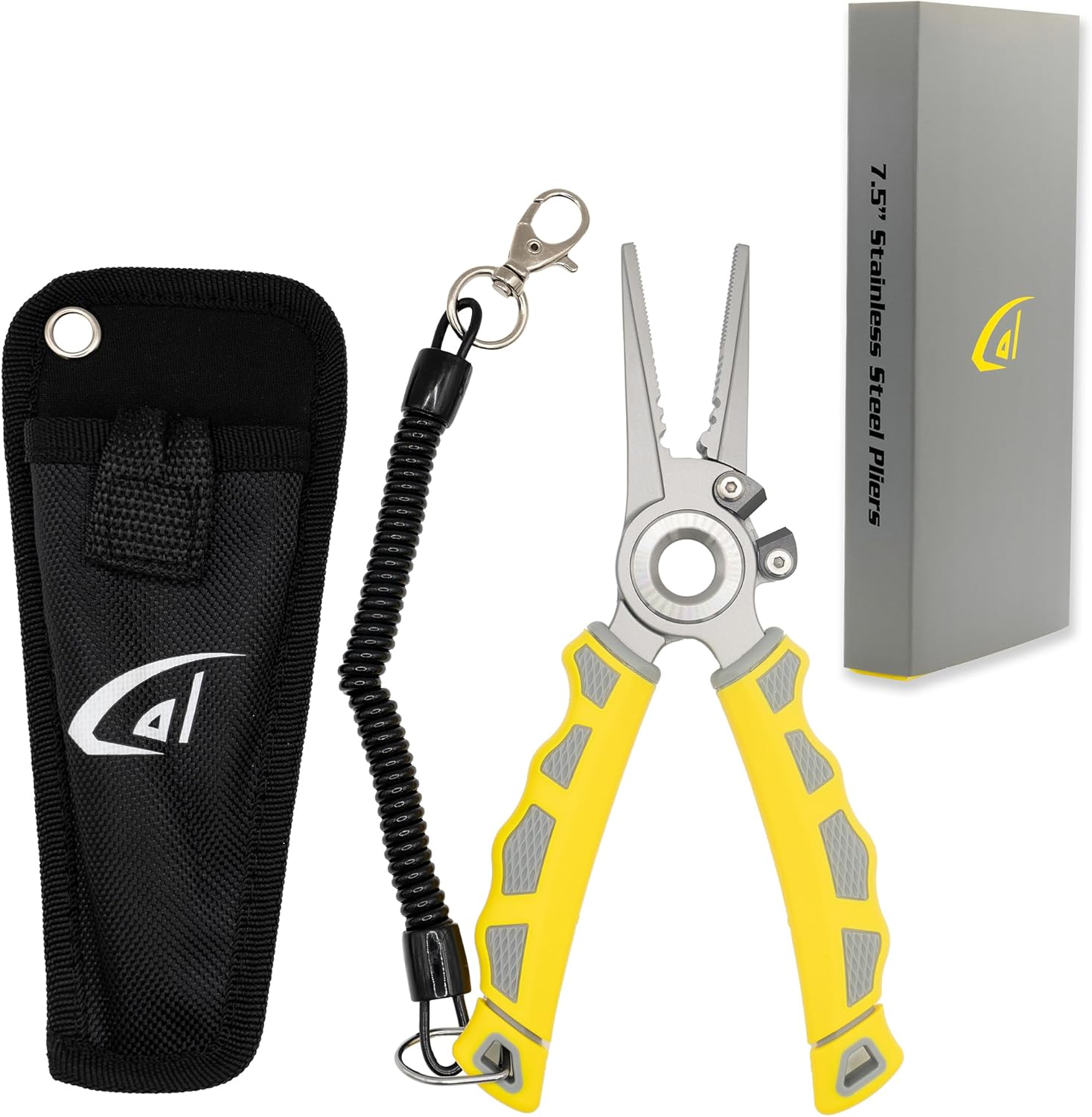
Out of the box, the plier feels solid and purposeful. The 17-4 stainless steel construction delivers the corrosion resistance angle that matters in saltwater environments where regular steel would pit and degrade. The textured rubber grip immediately signals durability over slick plastic, and the spring-loaded jaw mechanism is intuitive if you've used similar tools before. The Halo hinge design claims smooth, consistent operation, and the overall weight distribution favors one-handed use without excessive hand strain during setup or line work.
Where this plier earns its place is the tungsten carbide cutters. Unlike standard stainless steel blades that dull quickly, carbide holds an edge through repeated cuts of braided line, monofilament, and fluorocarbon without slipping or crushing the line. For anglers who make dozens of cuts per outing, this extends intervals between sharpening or replacement. The included accessories (custom sheath with belt loop and lanyard) are practical additions that address real angler needs for tool accessibility and security on the water, eliminating the friction of storing or carrying loose pliers.
Within the fishing plier category, this model positions itself among mid-range options that balance material quality with specialized cutters. Corrosion-resistant stainless steel is now standard in saltwater fishing gear, so that's not a differentiator. What sets it apart is the tungsten carbide investment, which typically appears on higher-priced models. The five-year warranty signals confidence in materials and workmanship, though warranty coverage terms remain subject to Danco's interpretation. Without user reviews or long-term field data, claims about durability and consistent operation remain unverified.
This plier is best for anglers who frequently fish saltwater or transition between fresh and salt environments and want a dedicated cutting tool that won't degrade with brine exposure. Freshwater-only anglers may find standard stainless options sufficiently durable at lower cost. Similarly, anyone who ties and cuts lines multiple times per session will benefit from carbide cutters' edge retention, while casual anglers who cut lines infrequently may not justify the premium.
Corrosion and Saltwater Care
Although the 17-4 stainless steel provides inherent corrosion resistance, salt and minerals still accumulate on tools during use. Rinse the plier with fresh water after saltwater sessions, paying attention to the hinge and joint where salt can trap and promote localized pitting over time. Dry thoroughly with a cloth rather than leaving it damp in a tackle bag.
The textured rubber grip will retain salt residue and can become slippery if not cleaned. A brief wipe with a damp cloth keeps the surface functional and extends the grip's lifespan. Store the plier in the included sheath in a dry location; avoid leaving it loose in a wet tackle box or exposed to direct sun for extended periods, which can degrade the rubber texture and discolor the grip over months of storage.
Specifications Comparison
Weight and material choice create the clearest split in this category. The KastKing Ti-Forge pairs titanium-alloy jaws with a lightweight 3.5 oz aluminum body, while the Speed Demon Pro uses heavier 7.5-inch stainless steel for increased cutting leverage. GOMEXUS takes full titanium further, building nearly every component including springs and screws from titanium, which shifts the value equation when replaceable blades come into play.
Cutting performance also diverges. All five options use tungsten carbide blades to slice through mono, fluorocarbon, and braid, but where you find those cutters and how easily you replace them matters for maintenance costs over time. Ergonomics and securing systems vary too: some include carabiners and coiled lanyards, while others rely on belt sheaths and traditional clip designs. These details compound when you’re fishing all day or frequently moving between boat and shore.
| Product | Weight | Primary Material | Cutting System |
|---|---|---|---|
| KastKing Ti-Forge Titanium Fishing Pliers | 3.5 oz | Titanium-alloy jaws, 6061 aluminum body | User-replaceable tungsten carbide |
| GOMEXUS Titanium Fishing Pliers | 150g (~5.3 oz) | Full titanium construction | Replaceable tungsten carbide side cutters |
| HOOK-EZE Titanium Fishing Pliers 4.1″ | 0.1 lbs (~1.6 oz) | TC4 aerospace-grade titanium | Tungsten carbide wire cutter |
| KastKing Speed Demon Pro 7.5″ | Not specified | Polymer-coated 420 stainless steel | Side-mounted tungsten carbide anvil cutters |
| Danco 7.5″ Stainless Steel Fishing Pliers | Not specified | 17-4 corrosion-resistant stainless steel | Integrated tungsten carbide cutters |
Buying Guide
Weight Trade-Off and Fatigue
The HOOK-EZE at 1.6 oz and the KastKing Ti-Forge at 3.5 oz dramatically reduce hand fatigue during long sessions, while the 7.5-inch stainless steel options (Speed Demon Pro and Danco) weigh considerably more. Lighter pliers suit boat and kayak fishing where you’re gripping for hours. Heavier stainless steel models give you more cutting leverage for thicker split rings and wire, a benefit worth the extra weight if you build steel leaders regularly or fish with heavy tackle.
Material and Saltwater Longevity
Full-titanium pliers like the GOMEXUS and HOOK-EZE resist corrosion at every fastener and spring, eliminating hidden rust points that stainless steel can develop over seasons. The KastKing Ti-Forge also uses corrosion-proof titanium jaws but pairs them with aluminum, which simplifies maintenance and lowers cost. If you fish saltwater regularly and store pliers in a tackle bag between trips, full titanium pays for itself through longer intervals between replacement.
Cutting Performance and Blade Replacement
Both the KastKing Ti-Forge and GOMEXUS highlight user-replaceable tungsten carbide blades, which means you can refresh cutting ability without replacing the entire tool. This matters if you fish braid constantly; dull carbide slips instead of cutting clean. Stainless steel models like the Speed Demon Pro and Danco integrate their cutters, so sharpening or replacement requires sending the plier back or accepting slower cuts over time.
Grip and Accessory Support
The GOMEXUS includes a Kevlar lanyard and premium leather sheath, while KastKing options bundle aluminum carabiners and coiled lanyards. The Danco and HOOK-EZE also include sheaths and lanyards but specify less about tether durability. If you fish from unstable platforms or frequently change locations, redundant security systems (belt sheath plus lanyard plus carabiner) reduce the risk of losing a tool overboard.
Size and One-Handed Use
The 4.1-inch HOOK-EZE prioritizes compact, one-handed access on crowded boat decks or rocky shores where space is tight. The 7.5-inch models sacrifice portability but offer longer jaws for larger fish or more aggressive hook sets. Mid-sized options like the KastKing Ti-Forge split the difference, supporting multi-function needs without excessive bulk.
How These Products Were Evaluated
Across these five pliers, the most consistent pattern is material maturity: titanium and premium stainless steel both deliver corrosion resistance, but they optimize for different use cases and budgets. The lighter titanium options concentrate on fatigue reduction and daily comfort, while stainless steel pliers prioritize cutting leverage and work well for anglers who store gear between sessions rather than carry it constantly.
A secondary pattern emerges around blade maintenance. Products offering replaceable cutters reduce long-term cost of ownership, especially for high-volume casters or boat anglers who use pliers dozens of times per outing. Non-replaceable systems are simpler upfront but assume you either accept dulling or plan tool replacement as routine maintenance. Security systems also vary meaningfully: options bundling carabiners, Kevlar lanyards, and custom sheaths address real loss risks on the water, while minimalist designs rely on traditional grip and storage.
Final Recommendation
Based on performance patterns, material durability, and customer ratings, here are three picks that address different fishing scenarios and budgets.
Best Overall: KastKing Ti-Forge Titanium Fishing Pliers: Lightweight, Corrosion-Resistant Multi-Tool: The KastKing Ti-Forge combines the lightest weight with full multi-function capability and achieves the highest customer rating (4.90) by balancing corrosion-proof titanium jaws with a precision aluminum body, replaceable cutters, and comprehensive security tethering.
Best Value: KastKing Speed Demon Pro 7.5" Split Ring Fishing Pliers | Saltwater Stainless Steel: The KastKing Speed Demon Pro delivers 46% harder stainless steel construction and 3x greater bending strength than aluminum at the lowest price point (28.79), making it the practical choice for anglers who prioritize cutting power and durability over ultralight portability.
Best for Saltwater Durability: GOMEXUS Titanium Fishing Pliers for Saltwater with Replaceable Cutters: GOMEXUS Titanium Fishing Pliers builds every component from premium titanium, eliminating corrosion vulnerabilities at springs and fasteners that plague mixed-material designs, and includes replaceable tungsten carbide with a Kevlar lanyard and leather sheath for long-term offshore use.
FAQs
Should I choose titanium or stainless steel best titanium fishing pliers?
Titanium prioritizes weight and corrosion immunity at higher cost, ideal for all-day hand fatigue and saltwater storage. Stainless steel offers greater cutting leverage and durability under heavy use at lower cost, better for anglers who build leaders or fish thicker line weights. Your choice depends on whether you optimize for comfort or cutting power.
Do I need replaceable wire cutter blades?
Replaceable blades reduce long-term cost if you fish frequently with braid or multi-strand line; you refresh sharpness without replacing the entire tool. Non-replaceable systems simplify the design but assume you’ll accept performance decline or accept replacement as routine maintenance after 1-2 seasons of heavy use.
What does "corrosion-proof" really mean in best titanium fishing pliers?
True corrosion resistance requires that every component (jaws, springs, screws, hinges) resist rust. Full-titanium pliers achieve this throughout. Mixed designs using titanium jaws with steel springs or aluminum bodies can still fail at hidden fasteners in saltwater. Check the material list, not just the jaw material.
How much weight difference actually matters when fishing?
The difference between 1.6 oz and 5+ oz adds up during 8-hour days; lighter pliers reduce hand fatigue and cramping significantly. However, heavier stainless steel models provide more cutting leverage for split rings and wire, so weight trade-off against function matters more than raw ounces.
What should I look for in a lanyard and sheath system?
Premium lanyards use Kevlar or heavy coil material, not thin monofilament, and sheaths should include belt loops or carabiners. Redundant security (carabiner plus lanyard plus sheath) is worth the extra bulk if you fish from boats or move frequently, but minimalist setups work fine for shore fishing where gear stays in one bag.