
Best Roomba for Dog Hair: Our Top Picks
If you’re a dog owner, you know that pet hair can quickly take over your home. Traditional vacuums require constant effort, but robot vacuums offer a convenient, hands-free solution that keeps your floors clean between deep cleans. Best Roomba For Dog Hair models are specifically engineered with powerful suction, anti-tangle brushes, and smart navigation to tackle the unique challenges of pet hair on both carpets and hard floors.
We’ve researched and compiled the best options currently available, ranging from 269.99 to 499.99, to help you find the perfect match for your home and budget. Whether you’re looking for a budget-friendly entry point or a premium combo model with mopping capabilities and extended self-emptying cycles, this guide has you covered.
What to Look for in a Robot Vacuum for Dog Hair
- Suction Power: Look for models with high suction ratings (typically 70x or more) to effectively lift and remove pet hair from both carpet and hard floors.
- Anti-Tangle Brushes: Dual rubber brushes are designed to prevent hair from wrapping around the brush roll, reducing maintenance needs.
- Self-Emptying Capability: Extended self-emptying cycles (60-75 days) mean less frequent maintenance and a more hands-off cleaning experience.
- Smart Navigation: LiDAR and AI obstacle avoidance help the vacuum navigate around pet toys, furniture, and other household items.
- HEPA Filtration: Essential for trapping pet dander and allergens, keeping your air quality high.
- Combo Functionality: Some models include mopping features, offering dual cleaning in one device.
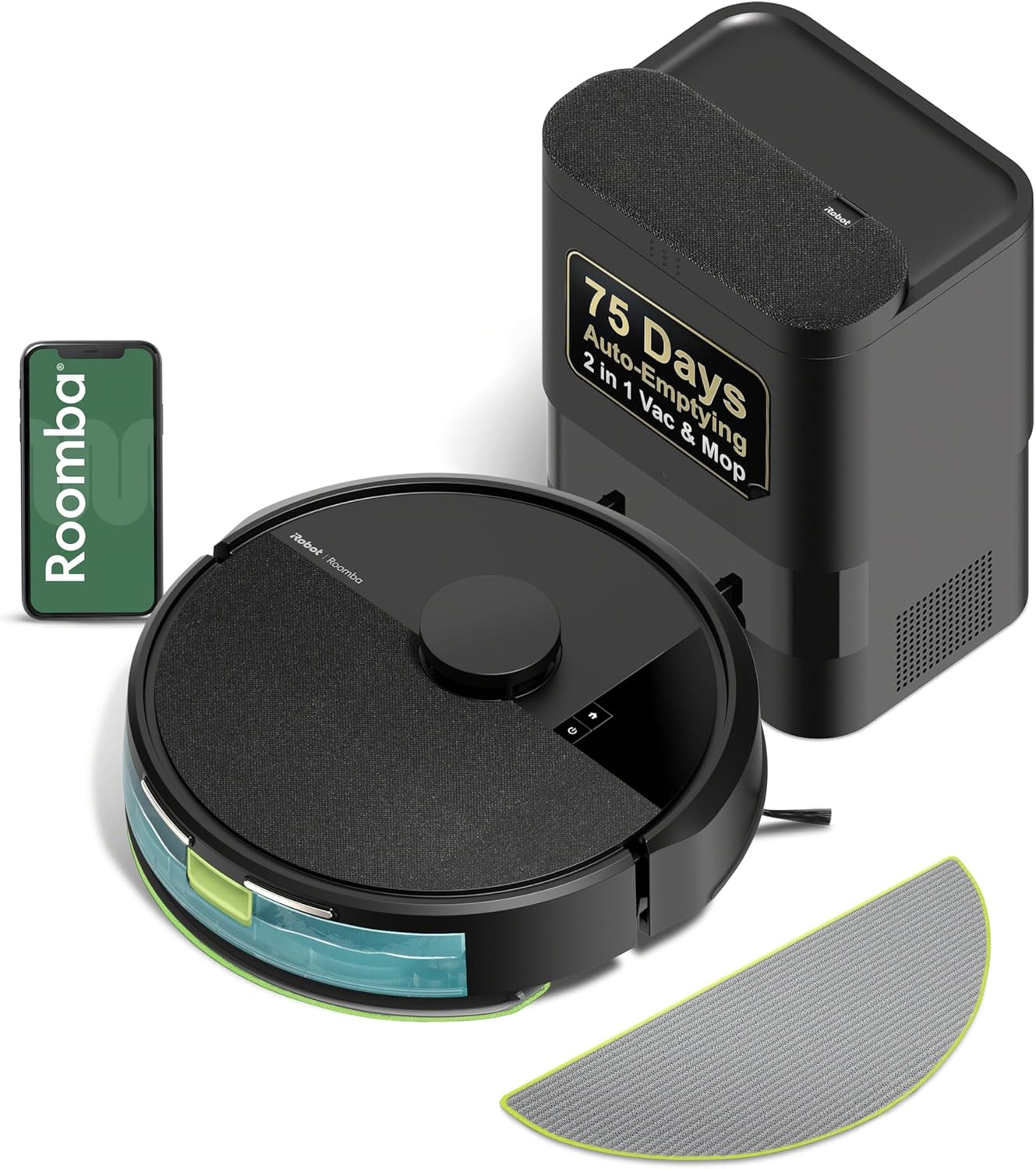
iRobot Roomba 105 Combo Robot Vacuum & Mop with 75-Day AutoEmpty Dock
Expand details⌄
Detailed Review
The Roomba 105 Combo arrives as a complete package with the robot, dock, and one extra mop pad already included. The dock itself is fairly substantial, designed to store 75 days worth of vacuumed debris in disposable bags that allegedly trap 99 percent of allergens down to 0.7 microns. Setup focuses on the 2.4 GHz network requirement, which means your WiFi network needs to support that frequency, though the documentation confirms your phone can jump to 5 GHz after pairing.
In daily use, the 70X suction increase over Roomba 600 series robots and the multi-surface brush combination target dirt pickup across different floor types. The edge-sweeping brush claims 20 percent better corner and edge cleaning, while the microfiber mop pad handles spill cleanup. The standout feature here is the automatic carpet detection that prevents the robot from mopping rugs unprompted, eliminating the need for manual zone setup before each clean. The SmartScrub mode provides 2X deeper scrubbing on high-traffic areas for tougher spots, controlled through the Roomba Home app or the robot's own buttons.
Compared to traditional stick vacuums and mops that require your hands-on effort, this robot reduces physical labor and maintains cleaning consistency on a schedule you define. The combo function means you can set it to vacuum only, mop only, or run both operations together depending on your floor's needs and how soiled it is. The LiDAR mapping system works to prevent falls down stairs and navigate around obstacles, though the effectiveness of that mapping depends on the layout of your specific home. Long-term convenience sits centered on the dock doing the heavy lifting of dust disposal rather than you opening a vacuum canister.
This robot makes the most sense for households with mostly hard flooring and area rugs they want kept dry, along with people who prefer automated scheduling over manual weekly cleaning sessions. The 75-day debris capacity and mop combo address two separate pain points at once. If your home is primarily carpeted or you live in a small apartment where daily manual sweeping is already quick, the complexity and expense may not justify itself.
Managing the AutoEmpty Dock and Consumables
The dock holds disposable bags that you replace roughly every 75 days under average use, though homes with pets or high foot traffic may need earlier changes. Inasmuch, your real ongoing cost involves buying replacement bags and replacement mop pads separately. The product includes one extra mop pad at purchase, giving you a backup to rotate while washing the used one, but you will need to budget for additional pads beyond that initial pair.
The dock requires a power outlet and enough floor space nearby, with the robot needing clear access on at least two sides for docking and undocking. If your home layout forces the dock into a corner or tight space, the robot may struggle to align properly. Ensuring the 2.4 GHz WiFi signal reaches the dock and the robot's cleaning zones improves reliability during autonomous operation.

iRobot Roomba 415X Vacuum and Mop Combo with 90-Day Self-Emptying Dock
Expand details⌄
Detailed Review
The Roomba 415X stands out immediately for its hybrid approach to floor cleaning. Unlike single-function robots, this unit integrates vacuuming and mopping so you're not choosing between them on a daily basis. The dock itself becomes a central hub, equipped to empty the robot's dust bin, wash the mop pads, and heat-dry them at 113°F. The slim profile is genuinely thoughtful for a larger combo unit, making it realistic to store under couches and beds where traditional robot vacuums won't fit.
In practical terms, the robot's real strength lies in its four distinct cleaning modes: vacuum-only, mop-only, combined, and sequential. This flexibility matters significantly if you have a mix of hard flooring and rugs at home. The SmartScrub technology applies targeted pressure to stubborn messes like dried food and muddy paw prints, addressing a genuine pain point with mopping robots that typically struggle with anything requiring elbow grease. The tangle-free rubber brush design is a valuable feature for pet owners, as hair wrap-up is a frequent maintenance issue with other models. The LiDAR navigation and automatic carpet detection (with mop pad lift-off at 10mm) mean the robot can operate across mixed floor types without manual intervention or pre-cleaning your home.
Compared to standard 2-in-1 robot cleaners, this model distinguishes itself primarily through the dock's ongoing maintenance capabilities. Many combo robots require you to manually wash pads, refill water, and manually empty bins. Here, those repetitive tasks are handled for up to 90 days at a time, which represents a genuine convenience advantage. The autonomous operation across hard floors and low-pile carpets, combined with four selectable modes, gives this robot more tactical control than basic models. App and voice control integration lets you target specific problem areas like entryways or pet zones rather than running full-house cycles.
The Roomba 415X makes the most sense for households that prioritize hands-free maintenance over budget considerations. If you have pets, multiple hard-floored rooms, and mixed floor types, the combination of the self-cleaning dock and pet-specific brush design addresses common real-world frustrations. It's built for someone willing to set up the dock and keep it maintained (refilling water, ensuring power) in exchange for minimizing day-to-day involvement with the robot itself. For renters or those with primarily carpeted homes, a simpler, cheaper robot vacuum would likely serve better.
Mop Dock Setup and Long-Term Maintenance
The AutoWash dock is the centerpiece of this system, and its effectiveness depends on proper setup and ongoing care. The dock needs a power outlet, a permanent water source connection, and an outlet for the drain line. Unlike portable mop tanks, this is a stationary piece of hardware, so placement should be permanent and accessible. Before first use, run the dock's self-cleaning cycle to prime the water circulation and ensure the heating element activates properly for the 113°F drying function.
Over the 90-day self-emptying cycle, the dock's dust bin will accumulate debris indirectly. While the robot empties into the dock automatically, you'll need to empty that dock bin manually when full, or it stops accepting debris. Similarly, the water tank requires refilling periodically; the 90-day claim assumes normal household use, not daily heavy traffic. Check the dock's filter and water lines monthly for mineral buildup, especially in hard-water areas, as heating hot water without sediment traps will degrade performance and shorten component lifespan.
The heat-dry cycle for mop pads is designed to prevent odor and mildew, but if your home is humid or the robot operates in damp conditions, inspect pads every few weeks for any discoloration. If the dock's drain becomes blocked, mopping will stop functioning until cleared. Keep the dock area clear of clutter so the robot can dock reliably; a misaligned dock won't trigger the self-cleaning cycle or water refill, and the robot will alert you via the app when docking fails.

Shark AV2501AE AI Robot Vacuum: LiDAR Navigation, 60-Day Self-Empty Base, Pet Hair
Expand details⌄
Detailed Review
Out of the box, the Shark AV2501AE feels solidly built and arrives with everything needed to get started: the robot unit itself, the bulky XL self-empty base, and two side brushes. The design is straightforward and functional rather than fancy. Setting up the Wi-Fi connection and mobile app takes a bit of patience, but once configured, the system integrates cleanly into a smart home. The base itself is substantial and claims a lot of real estate, so placement matters if you're working with limited floor space.
In actual use, the 360-degree LiDAR mapping creates a systematic cleaning pattern that feels methodical and thorough. The vacuum navigates around obstacles and adapts to room changes without getting stuck or lost, which is reassuring when running unsupervised overnight or during work hours. The Matrix Clean Navigation means the robot revisits areas to ensure pickup, and with pets in the home, this matters. The HEPA filtration genuinely traps fine dust and dander rather than recirculating it, and the self-cleaning brushroll reduces hair tangles compared to traditional robot vacuums. Over a full cleaning cycle, the robot handles both carpet and hard floors without requiring manual mode switches or surface-specific settings.
Compared to traditional bagged vacuums or smaller robot vacuums that empty weekly, the 60-day capacity is the defining advantage here. That means fewer trips to dispose of debris, less bag purchasing, and genuinely set-it-and-forget-it operation. The 120-minute runtime is generous enough to handle full-size homes on a single charge, with the Recharge and Resume feature ensuring the job finishes even if the battery runs low mid-clean. The Alexa integration works as advertised for scheduling and on-demand cleaning commands. For pet owners specifically, this unit addresses the pain point of frequent emptying that plagues smaller competitors.
This vacuum is best suited for households with multiple pets or significant shedding, especially in homes large enough to accommodate the self-empty base. It's also practical for anyone who values convenience over manual intervention. Pet owners tired of opening traditional vacuum canisters full of fur will notice the immediate difference. If floor space is extremely limited or you prefer a more compact setup, a standard robot vacuum might be a better fit.
Pet Hair and Allergen Management
The self-cleaning brushroll is worth understanding before use. Unlike vacuums that require daily hair removal from the brush, this design works to release tangled fur automatically, though you'll still want to check the brushroll monthly for stubborn wraps. The HEPA filtration captures particles at near-clinical levels, which genuinely helps in homes where pet dander triggers allergies or asthma.
The self-empty base creates suction during emptying, which is louder than a typical vacuum for about 10 seconds. If the dock is in a bedroom or office, schedule empties during daytime or use automation off-hours. The 60-day capacity assumes normal shedding; heavily multi-pet households may see the bin fill faster, so check the app's dust bin indicator to set realistic expectations. Empty the base's collection bin when it reaches capacity, not necessarily at the 60-day mark, to prevent overflow.

iRobot Roomba 505X Combo Vacuum & Mop with 75-Day Self-Emptying Dock
Expand details⌄
Detailed Review
The Roomba 505X arrives as a complete system with both the robot and its substantial multifunction dock, making setup straightforward if you have the space. The dock is roughly the footprint of a small appliance, so you'll need a dedicated spot in your home, ideally near an outlet and away from high-traffic areas. The robot itself has a modern, compact design that won't look out of place in most homes, and the DualClean mop pads sit flat when not in use, keeping the overall profile unobtrusive.
In daily use, the combo approach handles real-world scenarios reasonably well. The robot moves from hard floors to carpets without requiring manual intervention, automatically lifting its mop pads over rugs, which eliminates the need to babysit cleaning sessions across mixed flooring. The 70x suction increase over older 600-series models, combined with dual mop pads that reach 18 percent more floor area via PerfectEdge technology, means corners and baseboards get noticeably better coverage than traditional rectangular mops. SmartScrub's extra pressure for stubborn, dried-on messes addresses a genuine pain point in kitchens and entryways, though the system relies on its sensors to identify where this extra work is needed. The PrecisionVision AI does meaningfully reduce false starts and collisions by recognizing cords, socks, and pet waste, which is a genuine convenience for homes with clutter or multiple pets.
Compared to buying a robot vacuum and mop separately, the 505X consolidates maintenance into one dock, though that dock is non-trivial to accommodate. The AutoWash Dock's ability to stretch mop pad cleaning to roughly four weeks of hands-free operation is the system's strongest differentiator; most owners won't think about mop maintenance once it's configured. The 75-day debris bag means garbage duty happens roughly every two and a half months for average households. LiDAR mapping and voice assistant support give you granular control through the Roomba app if you want to target specific rooms or adjust suction in high-traffic zones, but you need the app (or voice commands) to access those options. Without it, the robot cleans on a default routine, which is functional but less tailored.
This robot suits busy households managing multiple floor types and moderate to heavy messes from pets or kids. Pet owners particularly benefit from the stronger suction and the dock's dust containment, which traps allergens in a sealed bag. It's less ideal if you live in a compact apartment with limited corner space for the dock, prefer fully hands-off setup without an app, or need extreme edge-to-edge cleaning in very tight corners; while PerfectEdge helps, it won't match a traditional mop in truly tight nooks. For families willing to adopt an app and carve out dock space, the system delivers genuine convenience and reliably fresh floors without daily effort.
Dock Setup and Maintenance
Before activating the 505X, designate a permanent spot for the AutoWash Dock on a level, hard floor surface close to an electrical outlet. The dock needs clearance in front of the robot's path and enough space around it for the robot to approach and dock reliably. Avoid placing it in high-traffic areas where people or pets might trip over the dock or the robot's charging cables. The deck should also be easily accessible so you can insert the debris bag and periodically run the self-cleaning cycle to reduce residue buildup, which is especially important in allergy-sensitive homes.
The self-emptying feature requires you to insert a disposable debris bag into the dock roughly every 75 days, depending on your home's mess load. Check the app periodically to see debris capacity warnings so you're not surprised. The dock's self-cleaning cycle should be initiated monthly or as recommended to prevent bacterial growth or odor inside the reservoir. You'll also need to refill the water tank if you use hot-water mopping; the dock heats water between cleaning sessions and evaporates it during the dry cycle, so it won't dry mop pads if the tank is empty.
Mop pads themselves don't require removal between cleaning cycles since the dock handles washing and drying automatically. However, inspect them occasionally for tangled hair or debris that might reduce effectiveness. The multi-surface rubber brush and edge-sweeping brush should be checked monthly and freed of wrapped hair or strings. These basic maintenance tasks prevent the dock from working harder than necessary and keep cleaning results consistent over time.

iRobot Roomba Max 705 Robot Vacuum with 75-Day AutoEmpty Dock & LiDAR
Expand details⌄
Detailed Review
The Roomba Max 705 arrives with both the robot and dock, presenting a straightforward unboxing experience with an extra filter and dock bag included. The unit combines a compact vacuum footprint with a substantial dock that houses the collection system. The dual rubber brushes feel like a practical mechanical upgrade over bristle designs, flexing to maintain floor contact whether crossing from carpet to tile or dealing with transitions. Setup appears to hinge on the smartphone app, which is necessary to unlock features like room-specific cleaning, suction adjustment, and scheduling.
Real-world performance centers on the vacuum's navigation and debris-handling approach. The ClearView Pro LiDAR builds a map of your home to guide systematic passes rather than random bouncing, and the PrecisionVision AI is designed to recognize common obstacles like cords and pet waste rather than getting tangled or stuck repeatedly. The extreme suction in Spot Clean mode is quantified as 180 times stronger than the Roomba 600 series under that specific condition, suggesting meaningful power for heavy debris, though not all cleaning scenarios will activate it. The AutoEmpty dock is the headline feature, automatically expelling debris when the robot returns, reducing your interaction to occasional bag replacement every 75 days. That extended capacity appeals to anyone tired of emptying a traditional dustbin every other run.
Compared to standard robot vacuums, the Max 705 prioritizes convenience automation over simplicity. The dock eliminates the immediate chore of emptying, the LiDAR approach typically means fewer missed spots than camera-only systems, and the AI obstacle detection should reduce clearing hazards from your floors. The app-driven controls allow granular scheduling and room-specific targeting, which rival models sometimes reserve for higher price tiers. Dirt Detect Technology claims to sense concentrated messes and repeat passes automatically, a feature that benefits high-traffic households but may add runtime. The tradeoff is dependency on the Roomba Home App for full functionality and integration, so users preferring hardware buttons or a simpler experience may find the system overly connected.
This model fits households with pets dealing with regular hair and debris, working professionals or families with inconsistent schedules, and anyone in a multi-room home who wants zone-based cleaning without manual intervention. The anti-tangle dual brush design directly addresses pet hair clogging issues. The 75-day dock capacity also works well in homes where vacuuming frequency is predictable but not urgent; you gain breathing room between maintenance. If your home has minimal obstacles, low pet traffic, or you prioritize cost over convenience, a simpler model might serve you equally well. The Max 705 rewards homes where the combined benefits of strong suction, smart navigation, and true hands-free operation justify the ecosystem complexity.
AutoEmpty Dock Maintenance and Bag Replacement
The AutoEmpty dock's 75-day debris containment relies on an enclosed bag system that filters particles as small as 0.7 microns. When the bag reaches capacity, the vacuum alerts you through the app, and replacement is straightforward: open the dock cover, release the full bag, and insert a fresh one from your supply. Purchase compatible dock bags ahead of time so you're not caught unprepared when the notification arrives, especially if you run the vacuum frequently in a pet-heavy household.
Beyond bag changes, the dock itself requires minimal upkeep. Ensure the dock is placed on a hard floor in a well-ventilated area away from curtains or soft furnishings, since the auto-emptying process briefly expels a stream of air and fine particles. The dock's location should be easily accessible to the robot between cleaning cycles, so avoid corners or spaces behind furniture. Keep the dock's connection port clean and check the robot's dock connector every few months to prevent debris from interfering with the charging and debris-transfer mechanism.
The extra filter included in the box should be swapped into the robot periodically to maintain suction power, especially in homes with pets or high dust. A dirty filter reduces both suction effectiveness and the likelihood of the auto-empty dock functioning optimally. The app should guide routine maintenance tasks, so check notifications regularly to stay ahead of filter degradation and avoid performance drops mid-cleaning cycle.
Finding Your Ideal Pet Hair Solution
The {{best roomba for dog hair}} depends on your specific needs, home size, and budget. If you have a smaller home or are new to robot vacuums, starting with a budget-friendly option like the Shark AV2501AE can be a smart choice. For those with larger homes or multiple pets, investing in a premium combo model with extended self-emptying cycles will provide superior convenience and cleaning performance.
All of the models in our roundup feature powerful suction, pet-specific design elements, and smart navigation to handle the challenges of dog hair effectively. Consider your home layout, the amount of pet hair you deal with daily, and whether you’d benefit from mopping capabilities when making your final decision.
With the right robot vacuum handling your floors, you’ll spend less time cleaning and more time enjoying your home and your furry companion.
