Best Robot Vacuums for Long Hair: Our Top Picks
If you have long hair—whether your own or from beloved pets—a standard robot vacuum can become a frustrating maintenance nightmare. Hair wraps around brushes, clogs the system, and leaves you constantly cleaning the unit instead of enjoying its convenience.
That’s why we’ve rounded up the {{5}} best Best Robot Vacuum For Long Hair options that feature anti-tangle technology, powerful suction, and self-emptying capabilities. These models are specifically engineered to handle hair without frequent intervention, saving you time and stress.
Whether you’re looking for an affordable entry point or a premium all-in-one solution with mopping capabilities, you’ll find options in this guide ranging from 269.99 to 599.99. Each model has been selected for its proven ability to manage long hair while maintaining strong cleaning performance on both carpet and hard floors.
What to Look for in a Robot Vacuum for Long Hair
When shopping for a Best Robot Vacuum For Long Hair, prioritize these features:
- Anti-tangle brush design — Zero-tangle or dual-roller systems prevent hair from wrapping
- High suction power — 10,000+ Pa ensures deep cleaning of embedded hair
- Self-emptying base — Reduces manual hair disposal and maintenance
- Smart navigation — LiDAR or AI mapping prevents missed spots
- Pet hair optimization — Specialized features for households with shedding pets

Shark AV2501AE AI Robot Vacuum: LiDAR Navigation, 60-Day Self-Empty Base, Pet Hair
Expand details⌄
Detailed Review
Out of the box, the Shark AV2501AE feels solidly built and arrives with everything needed to get started: the robot unit itself, the bulky XL self-empty base, and two side brushes. The design is straightforward and functional rather than fancy. Setting up the Wi-Fi connection and mobile app takes a bit of patience, but once configured, the system integrates cleanly into a smart home. The base itself is substantial and claims a lot of real estate, so placement matters if you're working with limited floor space.
In actual use, the 360-degree LiDAR mapping creates a systematic cleaning pattern that feels methodical and thorough. The vacuum navigates around obstacles and adapts to room changes without getting stuck or lost, which is reassuring when running unsupervised overnight or during work hours. The Matrix Clean Navigation means the robot revisits areas to ensure pickup, and with pets in the home, this matters. The HEPA filtration genuinely traps fine dust and dander rather than recirculating it, and the self-cleaning brushroll reduces hair tangles compared to traditional robot vacuums. Over a full cleaning cycle, the robot handles both carpet and hard floors without requiring manual mode switches or surface-specific settings.
Compared to traditional bagged vacuums or smaller robot vacuums that empty weekly, the 60-day capacity is the defining advantage here. That means fewer trips to dispose of debris, less bag purchasing, and genuinely set-it-and-forget-it operation. The 120-minute runtime is generous enough to handle full-size homes on a single charge, with the Recharge and Resume feature ensuring the job finishes even if the battery runs low mid-clean. The Alexa integration works as advertised for scheduling and on-demand cleaning commands. For pet owners specifically, this unit addresses the pain point of frequent emptying that plagues smaller competitors.
This vacuum is best suited for households with multiple pets or significant shedding, especially in homes large enough to accommodate the self-empty base. It's also practical for anyone who values convenience over manual intervention. Pet owners tired of opening traditional vacuum canisters full of fur will notice the immediate difference. If floor space is extremely limited or you prefer a more compact setup, a standard robot vacuum might be a better fit.
Pet Hair and Allergen Management
The self-cleaning brushroll is worth understanding before use. Unlike vacuums that require daily hair removal from the brush, this design works to release tangled fur automatically, though you'll still want to check the brushroll monthly for stubborn wraps. The HEPA filtration captures particles at near-clinical levels, which genuinely helps in homes where pet dander triggers allergies or asthma.
The self-empty base creates suction during emptying, which is louder than a typical vacuum for about 10 seconds. If the dock is in a bedroom or office, schedule empties during daytime or use automation off-hours. The 60-day capacity assumes normal shedding; heavily multi-pet households may see the bin fill faster, so check the app's dust bin indicator to set realistic expectations. Empty the base's collection bin when it reaches capacity, not necessarily at the 60-day mark, to prevent overflow.

eufy E25 Robot Vacuum and Mop Combo with HydroJet Self-Clean Roller, 20,000 Pa Suction
Expand details⌄
Detailed Review
Setup takes about five minutes with no drilling required, and the unit feels well-designed for someone who values convenience. The all-in-one station sits prominently but not obtrusively, and connecting to the eufy app and voice assistants works smoothly. The build quality suggests this is built to handle daily use without feeling fragile or overly plastic.
In practice, the 20,000 Pa suction handles embedded pet hair and debris effectively, which matters if you have shedding animals. The HydroJet mop system refreshes the roller twice per second with clean water, meaning each pass should theoretically avoid spreading dirty water across floors like some single-tank systems do. The anti-tangle spiral brushes reduce hair wrapping, so you spend less time manually cleaning the brush head between runs. The 125-minute runtime covers most homes in one session, and the laser navigation remembers up to five floor plans, making it practical for multi-level houses.
Compared to vacuum-only robots or basic mop-only models, the combo approach saves money and time for households that want both functions. The all-in-one station eliminates the manual dumping, water swapping, and mop wringing that plague cheaper combos. However, this convenience comes with ongoing costs: the 3L dust bag needs replacement every 75 days or so, and water must be refilled regularly. The 2.4GHz WiFi connectivity is functional but lacks the reliability that 5GHz offers in homes with multiple devices.
This product is best suited for pet owners or households with large floor plans who prioritize hands-free maintenance and don't mind the consumable expenses. If you live in a small apartment or rarely use mopping, the all-in-one station overhead may not justify the cost. For families juggling busy schedules and looking to reduce weekly cleaning chores, the combination of strong suction, self-cleaning mop, and automated station represents a meaningful step up from entry-level combos.
Water and Consumables Management
The self-cleaning and auto-refill features only work when the robot returns to the station, so water and dust bag depletion are the key maintenance loops to track. The 3L dust bag lasts roughly 75 days under typical use, but pet hair or high-traffic homes may deplete it faster. Plan to order replacement bags before you run out, since an overfull bag reduces suction effectiveness.
Water management requires regular attention too. The station's hot-air drying at 50°C prolongs mop freshness between runs, but the system still depends on you keeping the water tank topped up. If you skip a refill, the next scheduled clean will run without mopping. For optimal performance and to avoid odors, aim to empty and refill the water roughly weekly, even if it's not completely depleted.

eufy C28 Robot Vacuum & Mop Combo with 75-Day Self-Cleaning Station & Pet Hair Technology
Expand details⌄
Detailed Review
The C28 arrives with a substantial docking station that immediately sets expectations for a premium, hands-off experience. The all-in-one base integrates dust storage (3L capacity), mop washing, hot-air drying at 50°C, and wastewater collection into a single footprint. Assembly is straightforward, though the station's size means you need dedicated floor space near an outlet, not tucked into a corner. The robot itself feels compact and purposeful, with the dual-brush setup and mop roller system visible from the bottom.
In real homes, the combination of features targets a specific problem: pet owners tired of manually rinsing mop heads and unclogging vacuums. The 28cm HydroJet roller spins 9 times per second with 24 water ports, designed to continuously self-clean during mopping sessions. The DuoSpiral brush promises to handle long hair without tangling, though the testing data provided covers synthetic hair mixes and Golden Retriever samples on hard floors and Wilton carpets, not every flooring type. The 15,000 Pa suction kicks into gear on carpets automatically, and at 54.89dB operation, it runs quieter than many older models. The LiDAR navigation avoids obstacles without recording video, a privacy advantage worth noting.
Compared to basic robot vacuums or separate mop-only units, the C28 consolidates two cleaning tasks into a single device, reducing daily decision-making and maintaining a mop head that doesn't degrade between uses. Its 75-day maintenance cycle is the real differentiator: if the station's hot-air drying and drainage work as designed, you're not dumping dirty water daily or hand-washing mop pads. The no-camera navigation appeals to privacy-conscious buyers, and the auto-mop lift on short carpets prevents soaking delicate fibers. For those with budget room, it trades upfront cost for genuine time savings and a cleaner mop lifecycle than traditional methods.
This robot is most valuable for multi-pet households where hair and odor management matter, and where you have the floor space and budget for the full station. If you live in a small apartment, have irregular mopping needs, or expect a robot vacuum that doubles as a mop without infrastructure, a simpler vacuum-only model may suit you better. For anyone seeking a setup that genuinely reduces weekly maintenance burden, the C28 delivers a realistic path toward that goal.
Setting Up the Docking Station for Long-Term Success
The 75-day maintenance promise hinges on proper station placement and setup. Position the base on a flat, level floor with at least 1.5 feet of clearance in front and to the sides, away from direct sunlight and high-humidity areas like bathrooms. The station handles wastewater collection, but you'll still need to empty the internal wastewater tank periodically depending on your home's humidity and mopping frequency. Hot-air drying at 50°C works best when the room maintains moderate humidity; in very humid climates, mold risk increases between cycles, so consider running a dehumidifier nearby if you notice dampness.
The 3L dust bag inside the station fills gradually based on your floor size and carpet coverage. Denser homes with more carpet will hit the 75-day window sooner than hard-floor-heavy layouts. Check the bag level monthly using the app or manual inspection to avoid overfilling, which reduces vacuum efficiency. Mop water quality matters: use distilled or filtered water in the station's refill tank if your tap water is mineral-heavy, as deposits inside the 24 water ports can clog over time. A simple descaling cycle with white vinegar once monthly keeps the HydroJet roller ports functioning smoothly.
Align the robot's dock positioning with your home's layout so the return route doesn't cross high-traffic areas or stairs. LiDAR mapping during the first run will create your home's digital layout; restrict zones in the app where you don't want mopping (pet beds, rugs, wired areas). Once mapped, the robot handles scheduling autonomously, but manual interventions using the app let you adapt to spills or specific room priorities, keeping the system flexible rather than rigidly automated.

Roborock Q7 M5+ Self-Emptying Robot Vacuum and Mop with 10000Pa Suction
Expand details⌄
Detailed Review
The Q7 M5+ arrives as a premium all-in-one cleaning solution that prioritizes the overlap between convenience and effectiveness. The self-emptying dock with its 2.7L sealed dust bag is the standout design choice, eliminating routine emptying for weeks at a time. This matters most for people in multi-pet households or large spaces where debris accumulation is constant; the device handles pet hair collection without the weekly interruption most robot vacuums demand. The main brush features JawScrapers design paired with a 0% hair-tangling side brush, a deliberate engineering choice that speaks to households with shedding animals.
In practical use, the 10,000Pa suction addresses a real problem robot vacuums struggle with: pulling embedded pet hair from carpet fibers and into the collection system rather than just pushing debris around. The mopping capability adds flexibility by combining vacuuming and mopping into a single pass, with three adjustable water flow settings to match different floor types and soil levels. The PreciSense LiDAR navigation maps rooms in real time, enabling optimized cleaning paths rather than random patterns, which translates to more complete coverage and fewer missed areas. App integration lets users schedule cleanings, set no-go zones around pet areas, and monitor progress remotely, grounding the convenience factor in actual time savings.
Compared to robot vacuums that only vacuum or mops that only mop, this dual-function approach reduces the friction of managing two separate devices and their docking requirements. The self-empty feature places it above vacuum-only models in the mid-to-premium segment; users with similar suction specs in single-task devices would still face weekly manual emptying. The LiDAR mapping and app controls align with industry standards at this price tier, so the differentiator really is the combination of high suction, anti-tangle engineering, and extended self-empty cycles targeting pet owners specifically.
This product makes the most sense for households with multiple pets, larger floor plans, or owners who prioritize automation over hands-on adjustments. The anti-tangle system and high suction directly address the frustrations of pet hair cleanup, while the 7-9 week self-empty window removes a major maintenance barrier. Anyone with irregular WiFi infrastructure or homes using 5GHz-only networks may hit connectivity friction, and the absence of user reviews means real-world durability and long-term performance remain unvalidated by owners. For committed pet owners willing to invest in a premium setup, the Q7 M5+ consolidates multiple cleaning tasks into one autonomous device.
Pet Hair Maintenance and Brush Care
The Dual Anti-Tangle system is designed to reduce hair wrapping, but brush inspection remains necessary for optimal performance. Regular checks of the JawScrapers main brush and side brush for any accumulated hair or debris prevent the suction power from degrading over time, even with the 0% hair-tangling claims. Pet owners should expect periodic cleaning of these components as routine maintenance, not elimination of the problem entirely.
The 2.7L sealed dust bag in the RockDock Plus handles extended cycles but will eventually require replacement. For households with multiple shedding pets, monitoring bag fullness through the app's battery and status alerts helps predict when changes are needed, preventing surprises if the vacuum can no longer complete its weekly schedule. Setting up no-go zones around pet bedding or play areas within the app protects sensitive spaces from unnecessary daily coverage, reducing wear on the device and focusing cleaning where it matters most.

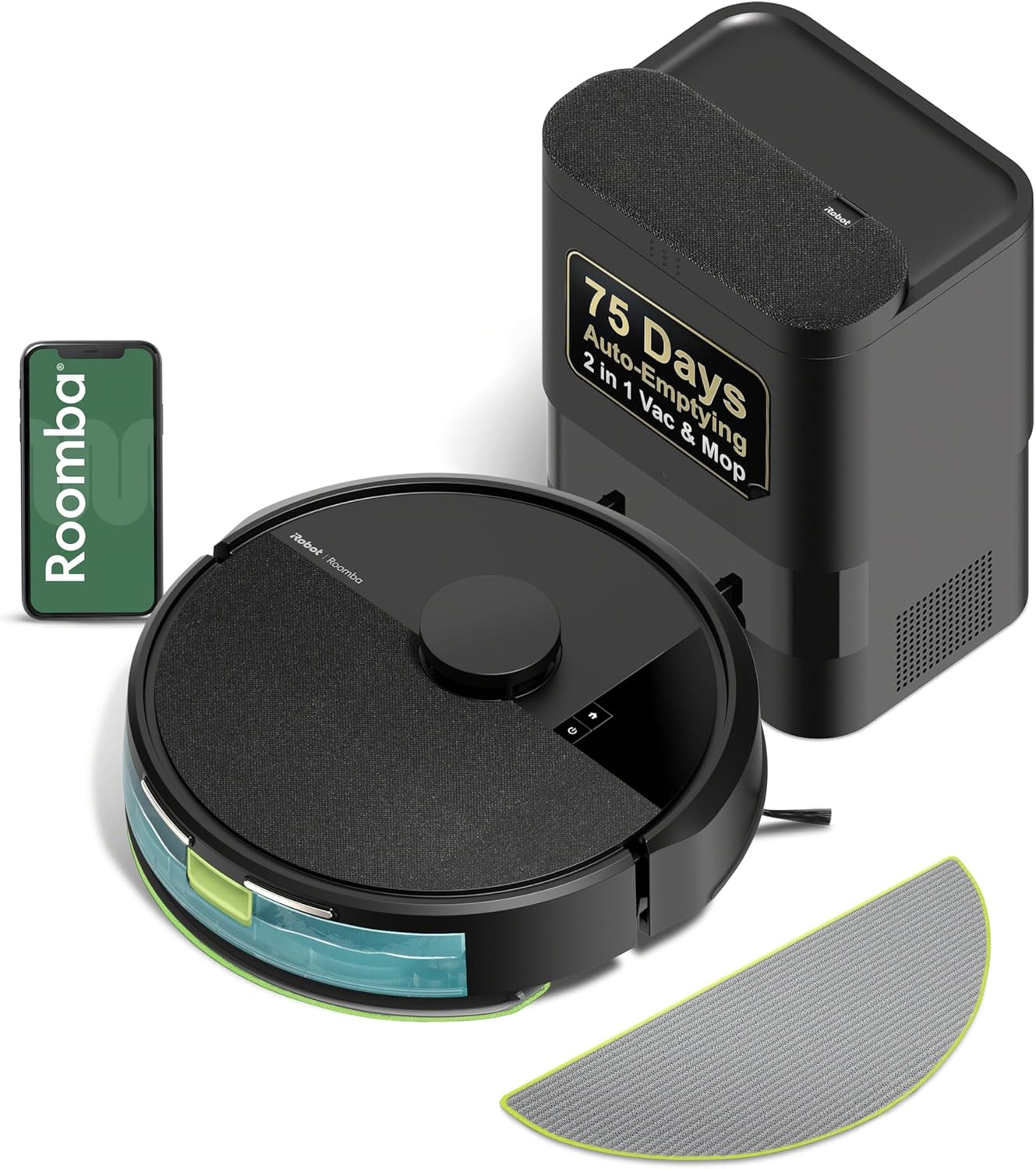
iRobot Roomba 415X Vacuum and Mop Combo with 90-Day Self-Emptying Dock
Expand details⌄
Detailed Review
The Roomba 415X stands out immediately for its hybrid approach to floor cleaning. Unlike single-function robots, this unit integrates vacuuming and mopping so you're not choosing between them on a daily basis. The dock itself becomes a central hub, equipped to empty the robot's dust bin, wash the mop pads, and heat-dry them at 113°F. The slim profile is genuinely thoughtful for a larger combo unit, making it realistic to store under couches and beds where traditional robot vacuums won't fit.
In practical terms, the robot's real strength lies in its four distinct cleaning modes: vacuum-only, mop-only, combined, and sequential. This flexibility matters significantly if you have a mix of hard flooring and rugs at home. The SmartScrub technology applies targeted pressure to stubborn messes like dried food and muddy paw prints, addressing a genuine pain point with mopping robots that typically struggle with anything requiring elbow grease. The tangle-free rubber brush design is a valuable feature for pet owners, as hair wrap-up is a frequent maintenance issue with other models. The LiDAR navigation and automatic carpet detection (with mop pad lift-off at 10mm) mean the robot can operate across mixed floor types without manual intervention or pre-cleaning your home.
Compared to standard 2-in-1 robot cleaners, this model distinguishes itself primarily through the dock's ongoing maintenance capabilities. Many combo robots require you to manually wash pads, refill water, and manually empty bins. Here, those repetitive tasks are handled for up to 90 days at a time, which represents a genuine convenience advantage. The autonomous operation across hard floors and low-pile carpets, combined with four selectable modes, gives this robot more tactical control than basic models. App and voice control integration lets you target specific problem areas like entryways or pet zones rather than running full-house cycles.
The Roomba 415X makes the most sense for households that prioritize hands-free maintenance over budget considerations. If you have pets, multiple hard-floored rooms, and mixed floor types, the combination of the self-cleaning dock and pet-specific brush design addresses common real-world frustrations. It's built for someone willing to set up the dock and keep it maintained (refilling water, ensuring power) in exchange for minimizing day-to-day involvement with the robot itself. For renters or those with primarily carpeted homes, a simpler, cheaper robot vacuum would likely serve better.
Mop Dock Setup and Long-Term Maintenance
The AutoWash dock is the centerpiece of this system, and its effectiveness depends on proper setup and ongoing care. The dock needs a power outlet, a permanent water source connection, and an outlet for the drain line. Unlike portable mop tanks, this is a stationary piece of hardware, so placement should be permanent and accessible. Before first use, run the dock's self-cleaning cycle to prime the water circulation and ensure the heating element activates properly for the 113°F drying function.
Over the 90-day self-emptying cycle, the dock's dust bin will accumulate debris indirectly. While the robot empties into the dock automatically, you'll need to empty that dock bin manually when full, or it stops accepting debris. Similarly, the water tank requires refilling periodically; the 90-day claim assumes normal household use, not daily heavy traffic. Check the dock's filter and water lines monthly for mineral buildup, especially in hard-water areas, as heating hot water without sediment traps will degrade performance and shorten component lifespan.
The heat-dry cycle for mop pads is designed to prevent odor and mildew, but if your home is humid or the robot operates in damp conditions, inspect pads every few weeks for any discoloration. If the dock's drain becomes blocked, mopping will stop functioning until cleared. Keep the dock area clear of clutter so the robot can dock reliably; a misaligned dock won't trigger the self-cleaning cycle or water refill, and the robot will alert you via the app when docking fails.
Finding Your Perfect Match
The {{best robot vacuum for long hair}} depends on your specific needs, home layout, and budget. If you want maximum convenience and have the budget, the premium models with mopping combos and extended self-emptying cycles offer the best long-term value. For those watching their spending, the more affordable options still deliver impressive anti-tangle performance.
All of the vacuums in this roundup have been chosen because they genuinely address the long-hair problem that makes so many people abandon their robot vacuums. No matter which model you choose, you’re investing in a cleaner home and fewer hairball-related headaches.
Ready to upgrade? Pick the model that best fits your home and lifestyle, and say goodbye to constantly unclogging your vacuum.