
Best iRobot for Pet Hair: Complete 2026 Buyer’s Guide
If you share your home with pets, you know the struggle of keeping up with constant shedding. Pet hair clings to carpets, embeds in fibers, and seems to multiply overnight. That’s where the {{best irobot for pet hair}} comes in—a smart investment that handles the work while you relax.
iRobot has engineered its Roomba line specifically with pet owners in mind. Our roundup features {{10}} exceptional models that combine powerful suction, intelligent navigation, and self-emptying convenience. Whether you’re looking for a budget-friendly option or a premium combo unit with mopping capabilities, you’ll find the perfect match in this collection.
What Makes These Models Pet-Friendly?
- Powerful Suction: Multi-stage filtration systems capture fine pet dander and allergens
- Anti-Tangle Technology: Dual rubber brushes prevent hair from wrapping around bristles
- Extended Self-Emptying: Many models empty themselves for 60-75 days, reducing your maintenance
- Smart Mapping: LiDAR navigation ensures thorough coverage of every room
- Obstacle Avoidance: AI-powered sensors protect pet toys and bowls from getting stuck
Our selection spans a wide price range from 149.00 to 499.99, with an average cost of 318.56, so you can find a model that fits your budget and cleaning needs.

iRobot Roomba 415X Vacuum and Mop Combo with 90-Day Self-Emptying Dock
Expand details⌄
Detailed Review
The Roomba 415X stands out immediately for its hybrid approach to floor cleaning. Unlike single-function robots, this unit integrates vacuuming and mopping so you're not choosing between them on a daily basis. The dock itself becomes a central hub, equipped to empty the robot's dust bin, wash the mop pads, and heat-dry them at 113°F. The slim profile is genuinely thoughtful for a larger combo unit, making it realistic to store under couches and beds where traditional robot vacuums won't fit.
In practical terms, the robot's real strength lies in its four distinct cleaning modes: vacuum-only, mop-only, combined, and sequential. This flexibility matters significantly if you have a mix of hard flooring and rugs at home. The SmartScrub technology applies targeted pressure to stubborn messes like dried food and muddy paw prints, addressing a genuine pain point with mopping robots that typically struggle with anything requiring elbow grease. The tangle-free rubber brush design is a valuable feature for pet owners, as hair wrap-up is a frequent maintenance issue with other models. The LiDAR navigation and automatic carpet detection (with mop pad lift-off at 10mm) mean the robot can operate across mixed floor types without manual intervention or pre-cleaning your home.
Compared to standard 2-in-1 robot cleaners, this model distinguishes itself primarily through the dock's ongoing maintenance capabilities. Many combo robots require you to manually wash pads, refill water, and manually empty bins. Here, those repetitive tasks are handled for up to 90 days at a time, which represents a genuine convenience advantage. The autonomous operation across hard floors and low-pile carpets, combined with four selectable modes, gives this robot more tactical control than basic models. App and voice control integration lets you target specific problem areas like entryways or pet zones rather than running full-house cycles.
The Roomba 415X makes the most sense for households that prioritize hands-free maintenance over budget considerations. If you have pets, multiple hard-floored rooms, and mixed floor types, the combination of the self-cleaning dock and pet-specific brush design addresses common real-world frustrations. It's built for someone willing to set up the dock and keep it maintained (refilling water, ensuring power) in exchange for minimizing day-to-day involvement with the robot itself. For renters or those with primarily carpeted homes, a simpler, cheaper robot vacuum would likely serve better.
Mop Dock Setup and Long-Term Maintenance
The AutoWash dock is the centerpiece of this system, and its effectiveness depends on proper setup and ongoing care. The dock needs a power outlet, a permanent water source connection, and an outlet for the drain line. Unlike portable mop tanks, this is a stationary piece of hardware, so placement should be permanent and accessible. Before first use, run the dock's self-cleaning cycle to prime the water circulation and ensure the heating element activates properly for the 113°F drying function.
Over the 90-day self-emptying cycle, the dock's dust bin will accumulate debris indirectly. While the robot empties into the dock automatically, you'll need to empty that dock bin manually when full, or it stops accepting debris. Similarly, the water tank requires refilling periodically; the 90-day claim assumes normal household use, not daily heavy traffic. Check the dock's filter and water lines monthly for mineral buildup, especially in hard-water areas, as heating hot water without sediment traps will degrade performance and shorten component lifespan.
The heat-dry cycle for mop pads is designed to prevent odor and mildew, but if your home is humid or the robot operates in damp conditions, inspect pads every few weeks for any discoloration. If the dock's drain becomes blocked, mopping will stop functioning until cleared. Keep the dock area clear of clutter so the robot can dock reliably; a misaligned dock won't trigger the self-cleaning cycle or water refill, and the robot will alert you via the app when docking fails.

iRobot Roomba 505X Combo Vacuum & Mop with 75-Day Self-Emptying Dock
Expand details⌄
Detailed Review
The Roomba 505X arrives as a complete system with both the robot and its substantial multifunction dock, making setup straightforward if you have the space. The dock is roughly the footprint of a small appliance, so you'll need a dedicated spot in your home, ideally near an outlet and away from high-traffic areas. The robot itself has a modern, compact design that won't look out of place in most homes, and the DualClean mop pads sit flat when not in use, keeping the overall profile unobtrusive.
In daily use, the combo approach handles real-world scenarios reasonably well. The robot moves from hard floors to carpets without requiring manual intervention, automatically lifting its mop pads over rugs, which eliminates the need to babysit cleaning sessions across mixed flooring. The 70x suction increase over older 600-series models, combined with dual mop pads that reach 18 percent more floor area via PerfectEdge technology, means corners and baseboards get noticeably better coverage than traditional rectangular mops. SmartScrub's extra pressure for stubborn, dried-on messes addresses a genuine pain point in kitchens and entryways, though the system relies on its sensors to identify where this extra work is needed. The PrecisionVision AI does meaningfully reduce false starts and collisions by recognizing cords, socks, and pet waste, which is a genuine convenience for homes with clutter or multiple pets.
Compared to buying a robot vacuum and mop separately, the 505X consolidates maintenance into one dock, though that dock is non-trivial to accommodate. The AutoWash Dock's ability to stretch mop pad cleaning to roughly four weeks of hands-free operation is the system's strongest differentiator; most owners won't think about mop maintenance once it's configured. The 75-day debris bag means garbage duty happens roughly every two and a half months for average households. LiDAR mapping and voice assistant support give you granular control through the Roomba app if you want to target specific rooms or adjust suction in high-traffic zones, but you need the app (or voice commands) to access those options. Without it, the robot cleans on a default routine, which is functional but less tailored.
This robot suits busy households managing multiple floor types and moderate to heavy messes from pets or kids. Pet owners particularly benefit from the stronger suction and the dock's dust containment, which traps allergens in a sealed bag. It's less ideal if you live in a compact apartment with limited corner space for the dock, prefer fully hands-off setup without an app, or need extreme edge-to-edge cleaning in very tight corners; while PerfectEdge helps, it won't match a traditional mop in truly tight nooks. For families willing to adopt an app and carve out dock space, the system delivers genuine convenience and reliably fresh floors without daily effort.
Dock Setup and Maintenance
Before activating the 505X, designate a permanent spot for the AutoWash Dock on a level, hard floor surface close to an electrical outlet. The dock needs clearance in front of the robot's path and enough space around it for the robot to approach and dock reliably. Avoid placing it in high-traffic areas where people or pets might trip over the dock or the robot's charging cables. The deck should also be easily accessible so you can insert the debris bag and periodically run the self-cleaning cycle to reduce residue buildup, which is especially important in allergy-sensitive homes.
The self-emptying feature requires you to insert a disposable debris bag into the dock roughly every 75 days, depending on your home's mess load. Check the app periodically to see debris capacity warnings so you're not surprised. The dock's self-cleaning cycle should be initiated monthly or as recommended to prevent bacterial growth or odor inside the reservoir. You'll also need to refill the water tank if you use hot-water mopping; the dock heats water between cleaning sessions and evaporates it during the dry cycle, so it won't dry mop pads if the tank is empty.
Mop pads themselves don't require removal between cleaning cycles since the dock handles washing and drying automatically. However, inspect them occasionally for tangled hair or debris that might reduce effectiveness. The multi-surface rubber brush and edge-sweeping brush should be checked monthly and freed of wrapped hair or strings. These basic maintenance tasks prevent the dock from working harder than necessary and keep cleaning results consistent over time.
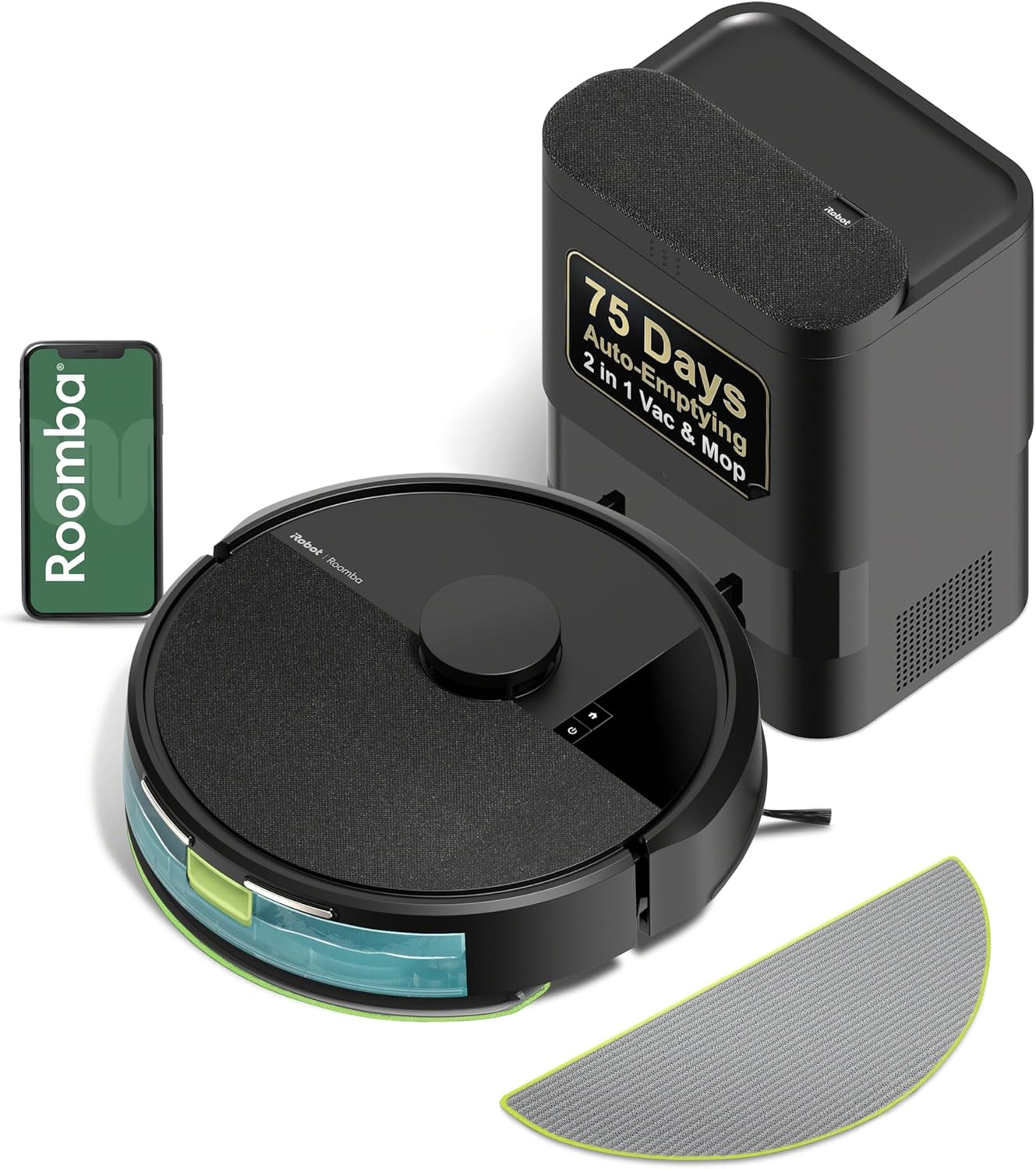
iRobot Roomba 105 Combo Robot Vacuum & Mop with 75-Day AutoEmpty Dock
Expand details⌄
Detailed Review
The Roomba 105 Combo arrives as a complete package with the robot, dock, and one extra mop pad already included. The dock itself is fairly substantial, designed to store 75 days worth of vacuumed debris in disposable bags that allegedly trap 99 percent of allergens down to 0.7 microns. Setup focuses on the 2.4 GHz network requirement, which means your WiFi network needs to support that frequency, though the documentation confirms your phone can jump to 5 GHz after pairing.
In daily use, the 70X suction increase over Roomba 600 series robots and the multi-surface brush combination target dirt pickup across different floor types. The edge-sweeping brush claims 20 percent better corner and edge cleaning, while the microfiber mop pad handles spill cleanup. The standout feature here is the automatic carpet detection that prevents the robot from mopping rugs unprompted, eliminating the need for manual zone setup before each clean. The SmartScrub mode provides 2X deeper scrubbing on high-traffic areas for tougher spots, controlled through the Roomba Home app or the robot's own buttons.
Compared to traditional stick vacuums and mops that require your hands-on effort, this robot reduces physical labor and maintains cleaning consistency on a schedule you define. The combo function means you can set it to vacuum only, mop only, or run both operations together depending on your floor's needs and how soiled it is. The LiDAR mapping system works to prevent falls down stairs and navigate around obstacles, though the effectiveness of that mapping depends on the layout of your specific home. Long-term convenience sits centered on the dock doing the heavy lifting of dust disposal rather than you opening a vacuum canister.
This robot makes the most sense for households with mostly hard flooring and area rugs they want kept dry, along with people who prefer automated scheduling over manual weekly cleaning sessions. The 75-day debris capacity and mop combo address two separate pain points at once. If your home is primarily carpeted or you live in a small apartment where daily manual sweeping is already quick, the complexity and expense may not justify itself.
Managing the AutoEmpty Dock and Consumables
The dock holds disposable bags that you replace roughly every 75 days under average use, though homes with pets or high foot traffic may need earlier changes. Inasmuch, your real ongoing cost involves buying replacement bags and replacement mop pads separately. The product includes one extra mop pad at purchase, giving you a backup to rotate while washing the used one, but you will need to budget for additional pads beyond that initial pair.
The dock requires a power outlet and enough floor space nearby, with the robot needing clear access on at least two sides for docking and undocking. If your home layout forces the dock into a corner or tight space, the robot may struggle to align properly. Ensuring the 2.4 GHz WiFi signal reaches the dock and the robot's cleaning zones improves reliability during autonomous operation.

Roomba 105X Robot Vacuum with LiDAR Mapping and Smart App Control
Expand details⌄
Detailed Review
The Roomba 105X arrives ready to integrate into a household routine with minimal fuss. The 3-stage cleaning system combines strong suction with dual brushes designed to capture debris along edges and corners where pet hair typically accumulates. Its compact, modern design fits naturally into most home layouts without drawing attention, and the reliable Wi-Fi setup process takes only minutes to complete so you can schedule your first cleaning the same day.
In practice, the LiDAR mapping system learns your home's floor plan and cleans in organized rows rather than the random paths older robotic vacuums use, which translates to more consistent coverage and fewer missed areas. The 70X power-lifting suction advantage over the Roomba 600 series means embedded dust, dander, and pet hair lift more effectively from both carpets and hard floors. The robot avoids obstacles, furniture, and stairs thanks to specialized sensors, and it returns to its dock automatically when the battery runs low, then resumes exactly where it stopped to finish the job without your intervention.
The Roomba Home App gives you genuine control over cleaning patterns, allowing you to schedule automatic runs during school hours, focus extra passes on high-traffic kitchens and entryways, or activate Spot Cleaning for quick messes. Voice assistant integration works seamlessly for hands-free operation, and you can also trigger cleaning directly from the robot's onboard buttons. Compared to older robot vacuums or purely random-path models, the combination of LiDAR navigation, suction power, and app customization delivers more predictable, thorough cleaning that adapts to your family's rhythm.
The Roomba 105X suits households where daily automated cleaning is a priority but where you're not prepared to invest in premium models. It excels for pet owners and families with young kids whose living spaces accumulate crumbs and shed hair between deeper manual cleanings. If your home has multiple rooms or frequent changes in cleaning priorities, the room-by-room customization and reliable app make this model a practical upgrade over manual vacuuming or less intelligent robot options.
Maintaining Peak Suction and Brush Performance
The 3-stage cleaning system's effectiveness depends on regular maintenance. Both the multi-surface brush and edge-sweeping brush accumulate pet hair and fibers, so inspect and clean them weekly, especially in high-shedding households. The Roomba Home App tracks filter life and alerts you when replacement is needed; follow those notifications to avoid suction drops over time.
The LiDAR sensor on top of the unit requires occasional wiping to function optimally and maintain accurate room mapping. If the robot begins missing rooms or cleaning in irregular patterns after months of use, a quick lens cleaning often restores precise navigation. Keep the charging dock positioned on a hard, level floor away from obstacles to ensure reliable docking and consistent battery maintenance between cleaning cycles.

iRobot Roomba Max 705 Robot Vacuum with 75-Day AutoEmpty Dock & LiDAR
Expand details⌄
Detailed Review
The Roomba Max 705 arrives with both the robot and dock, presenting a straightforward unboxing experience with an extra filter and dock bag included. The unit combines a compact vacuum footprint with a substantial dock that houses the collection system. The dual rubber brushes feel like a practical mechanical upgrade over bristle designs, flexing to maintain floor contact whether crossing from carpet to tile or dealing with transitions. Setup appears to hinge on the smartphone app, which is necessary to unlock features like room-specific cleaning, suction adjustment, and scheduling.
Real-world performance centers on the vacuum's navigation and debris-handling approach. The ClearView Pro LiDAR builds a map of your home to guide systematic passes rather than random bouncing, and the PrecisionVision AI is designed to recognize common obstacles like cords and pet waste rather than getting tangled or stuck repeatedly. The extreme suction in Spot Clean mode is quantified as 180 times stronger than the Roomba 600 series under that specific condition, suggesting meaningful power for heavy debris, though not all cleaning scenarios will activate it. The AutoEmpty dock is the headline feature, automatically expelling debris when the robot returns, reducing your interaction to occasional bag replacement every 75 days. That extended capacity appeals to anyone tired of emptying a traditional dustbin every other run.
Compared to standard robot vacuums, the Max 705 prioritizes convenience automation over simplicity. The dock eliminates the immediate chore of emptying, the LiDAR approach typically means fewer missed spots than camera-only systems, and the AI obstacle detection should reduce clearing hazards from your floors. The app-driven controls allow granular scheduling and room-specific targeting, which rival models sometimes reserve for higher price tiers. Dirt Detect Technology claims to sense concentrated messes and repeat passes automatically, a feature that benefits high-traffic households but may add runtime. The tradeoff is dependency on the Roomba Home App for full functionality and integration, so users preferring hardware buttons or a simpler experience may find the system overly connected.
This model fits households with pets dealing with regular hair and debris, working professionals or families with inconsistent schedules, and anyone in a multi-room home who wants zone-based cleaning without manual intervention. The anti-tangle dual brush design directly addresses pet hair clogging issues. The 75-day dock capacity also works well in homes where vacuuming frequency is predictable but not urgent; you gain breathing room between maintenance. If your home has minimal obstacles, low pet traffic, or you prioritize cost over convenience, a simpler model might serve you equally well. The Max 705 rewards homes where the combined benefits of strong suction, smart navigation, and true hands-free operation justify the ecosystem complexity.
AutoEmpty Dock Maintenance and Bag Replacement
The AutoEmpty dock's 75-day debris containment relies on an enclosed bag system that filters particles as small as 0.7 microns. When the bag reaches capacity, the vacuum alerts you through the app, and replacement is straightforward: open the dock cover, release the full bag, and insert a fresh one from your supply. Purchase compatible dock bags ahead of time so you're not caught unprepared when the notification arrives, especially if you run the vacuum frequently in a pet-heavy household.
Beyond bag changes, the dock itself requires minimal upkeep. Ensure the dock is placed on a hard floor in a well-ventilated area away from curtains or soft furnishings, since the auto-emptying process briefly expels a stream of air and fine particles. The dock's location should be easily accessible to the robot between cleaning cycles, so avoid corners or spaces behind furniture. Keep the dock's connection port clean and check the robot's dock connector every few months to prevent debris from interfering with the charging and debris-transfer mechanism.
The extra filter included in the box should be swapped into the robot periodically to maintain suction power, especially in homes with pets or high dust. A dirty filter reduces both suction effectiveness and the likelihood of the auto-empty dock functioning optimally. The app should guide routine maintenance tasks, so check notifications regularly to stay ahead of filter degradation and avoid performance drops mid-cleaning cycle.

iRobot Roomba 205 DustCompactor Robot Vacuum with LiDAR Navigation and 60-Day Capacity
Expand details⌄
Detailed Review
The biggest appeal here is the space-saving design. Without a bulky dock to find room for, the robot itself becomes the entire system. It arrives ready to map your home with its onboard LiDAR, which quietly plots efficient cleaning routes even in dim light and lets you create keep-out zones through the app. The compact profile means it can tuck into almost any room, and the industrial-grade compactor mechanism handles debris without bags or mess, turning a chore into something genuinely hands-off.
In practice, the battery endurance keeps up with what matters most: actually finishing the job. Over three hours of runtime covers most apartment and house layouts in a single cycle, and when the battery dips low, the robot finds its charging spot and picks up right where it left off. The three-stage cleaning system (main brush, multi-surface roller, and edge sweeper) tackles hard floors and low-pile carpet alike. The 60-day no-emptying window is the real draw here, though this assumes typical household dirt volumes. Heavy-use homes with pets or outdoor traffic may find themselves emptying more often, since the compactor's capacity isn't infinite. Suction can be dialed across four levels, so you can balance power against battery life depending on what needs cleaning.
Compared to other robot vacuums, this model trades the established reliability of a separate dock system for pure convenience and floor space. The LiDAR navigation is more precise than basic bump-and-hit models, and the app integration lets you target specific rooms or set cleaning schedules. Where it differs is that earlier Roomba generations and some competitors still rely on docking stations for emptying, making the compactor approach genuinely novel. Long-term satisfaction hinges on accepting that the compactor will need occasional monitoring and that this vacuum works best on predictable, moderate dirt loads rather than extreme scenarios.
This robot vacuum is best suited for renters and owners of compact homes who find a dock footprint unrealistic, or anyone who simply wants to forget about vacuuming for weeks at a time. It works well in households with mostly hard floors or short carpeting, and pairs well with a quick broom for high-traffic entry points. If your home has multiple carpeted zones, heavy pet hair, or you need to tackle embedded dirt, a full-size upright or hybrid model may complement this system better despite the space trade-off.
Maximizing Compactor Life Between Intervals
The 60-day interval assumes the compactor has room to work, so debris type matters more than volume alone. Fine dust, crumbs, and light debris compact efficiently; pet hair, larger pebbles, or wet residue can fill the chamber faster. Check the app's filter-life indicator regularly, as a clogged filter reduces suction long before the actual bin fills up.
Between intervals, run the vacuum on moderate suction over high-traffic areas every 7-10 days rather than waiting until the calendar hits 60 days. This prevents the compactor from working overtime and keeps the system responsive. If you notice suction dropping noticeably mid-cycle before 60 days, that is typically a filter issue, not a full compactor. Replace the filter and the performance usually rebounds.
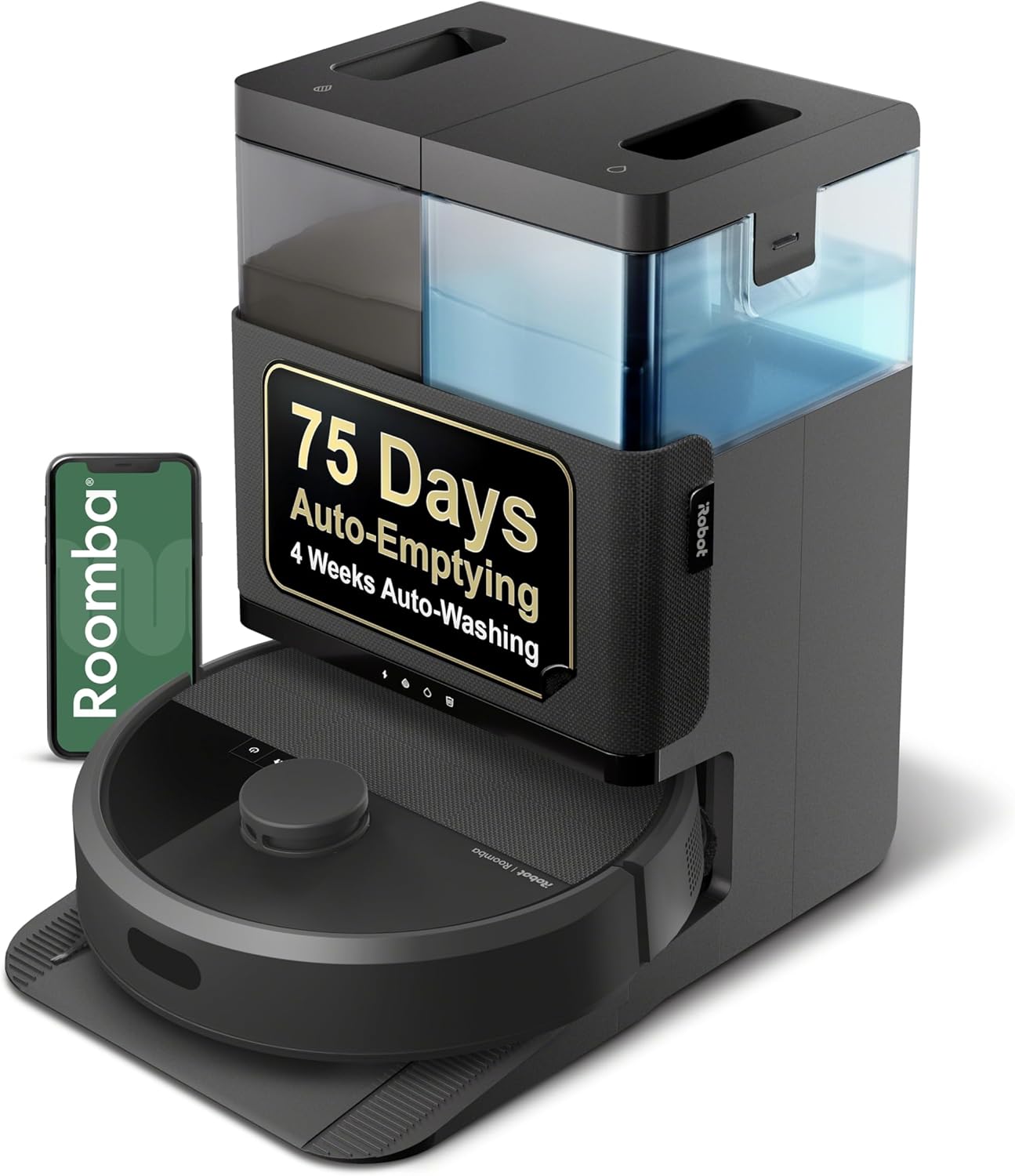
iRobot Roomba Plus 405 2-in-1 Vacuum & Mop with AutoWash Dock
Expand details⌄
Detailed Review
The Roomba Plus 405 arrives ready to work right out of the box. The robot itself feels solidly built, and the AutoWash dock is a substantial addition that handles the unglamorous parts of robotic cleaning. Setting up the Roomba Home app is straightforward, and the interface guides you through room mapping and customization without unnecessary complexity. The dual spinning mop pads and rubber brush are visible signs of a design aimed at serious floor cleaning, not just light maintenance.
In real-world use, the combination of suction and mopping creates a genuine cleaning effect. The vacuum component tackles pet hair and debris with enough power to justify the comparison to older Roomba models, while the SmartScrub feature adds downward pressure during mopping passes on hard floors. The automatic carpet detection is practical—the mop pads lift when the robot senses carpet, preventing wet patches on rugs. The 75-day emptying cycle means you genuinely can set it and forget it for weeks, and the pad washing between runs keeps the pads fresher than manually rinsing them every time. That said, the mopping excels at routine dust, crumbs, and light grime; heavy dried spills may require initial spot treatment.
Against other combo robots, the Roomba Plus 405 balances breadth of features with usability. The customization options—four suction levels, Smart Scrub intensity, Clean Zones for targeted attention, and Keep Out Zones for boundaries—let you tailor cleaning to your home's layout rather than forcing a one-size-fits-all routine. The LiDAR mapping is efficient and works well in most homes, though it doesn't offer the same room-by-room flexibility that some premium models provide. The app integrates voice control, which adds convenience without being essential. Overall, this is a device that delivers on its automation promise without requiring daily tweaking.
This robot works best for households that value reducing cleaning frequency and can accommodate the AutoWash dock in or near their main living area. Pet owners who deal with regular shedding will appreciate the suction power, while those with a mix of hard floors and carpets benefit from the intelligent pad lifting. If your home has multiple levels or minimal floor space for the dock, or if you prefer a more compact footprint, a simpler single-function robot might suit you better.
AutoWash Dock Setup and Optimization
The AutoWash dock requires a permanent placement in an accessible location—ideally on hard flooring near an outlet and away from high-traffic areas where residents might trip over the base. Give yourself at least 18 inches of clearance in the robot's approach direction so it can dock cleanly without hesitation. The dock handles pad rinsing, drying, and debris emptying, but the water reservoir needs occasional refills depending on how many cleaning runs you schedule per week; check the app's filter health notifications to stay ahead of maintenance.
To maximize the dock's potential, program your cleaning routine through the app based on your actual usage patterns. The 4-week pad washing cycle assumes about one mopping run per week; if you mop more frequently, you may need to manually refresh pads sooner. The 75-day debris storage means you can comfortably go several weeks between emptying, but rooms with heavy pet hair or fine dust may approach capacity faster. Keep the dock's sensors clean and ensure the dock sits on level flooring so the robot docks consistently on the first attempt.

iRobot Roomba i3+ EVO Self-Emptying Robot Vacuum with Smart Mapping
Expand details⌄
Detailed Review
Setting up the i3+ involves the Clean Base dock, which serves as both the charging station and automatic dirt disposal unit. The robot itself feels lightweight and compact, designed to fit under furniture and navigate around obstacles. The iRobot Home app walks you through initial setup and establishes Wi-Fi connectivity, after which the mapping begins. It learns your home layout gradually, identifying individual rooms rather than treating your space as one undifferentiated area, which means you can eventually ask it to clean only specific zones.
In actual use, the vacuum runs on a schedule you set through the app or voice command, and the convenience factor of a self-emptying base is genuine. Rather than manually emptying a dustbin every week or two, the robot returns automatically when full and transfers debris into a sealed bag inside the larger base unit. The 3-stage cleaning system and improved suction pull dirt from carpets and hard floors without requiring constant adjustment. Performance appears consistent for daily maintenance cleaning, though the Dirt Detect technology focuses on high-traffic areas where buildup matters most, so your entire home isn't scanned with equal attention each run.
Compared to standard robot vacuums, the i3+ adds meaningful value through room-level control and the self-emptying mechanism, which justifies the investment in the Clean Base hardware. The app-based learning means it gets better at scheduling over time, suggesting extra runs during peak shedding season or high-pollen days. While the 4.0 rating across nearly 20,000 reviews indicates solid overall satisfaction, it also signals that some owners encounter reliability issues or find the learning curve for app customization steep. The voice assistant integration works smoothly for on-demand cleaning and works with both Alexa and Google Assistant ecosystems.
This vacuum makes sense for households with pets where hair accumulation happens faster, busy families who prefer set-and-forget cleaning, or anyone frustrated by regular dustbin emptying. It requires some upfront investment beyond the vacuum itself due to the Clean Base requirement, and the room mapping doesn't happen instantly, so expect a week or two of learning before you can reliably assign cleaning tasks to specific areas. For those priorities, this model balances convenience and power effectively.
Maximizing the Self-Emptying Feature
The 60-day self-emptying window assumes consistent bin capacity; actual duration depends on your home size, floor type, and debris volume. Homes with heavy pet shedding or multiple carpeted areas may see more frequent returns to the base. Placing the Clean Base in a central, accessible location ensures the vacuum can navigate back efficiently without obstacles blocking its path.
The sealed disposal bag inside the base needs checking roughly every 60 days, though that interval varies. When you do empty it, the system is designed to minimize dust escape during bag removal, making the maintenance point significantly less frequent than with a standard bin. Check your app regularly for alerts about base readiness or any blockages in the vacuum's path to the dock.

iRobot Roomba 692 Robot Vacuum: Smart Cleaning for Carpets & Hard Floors
Expand details⌄
Detailed Review
Setting up the Roomba 692 feels straightforward, and the compact disc-shaped design fits naturally under most furniture without appearing bulky. The premium finish mentioned in the specs holds up visually, though it is ultimately a utilitarian appliance. Connecting via the iRobot Home App works smoothly, and linking it to Alexa or Google Assistant takes only a few minutes, so voice commands become your primary interaction method within days.
In everyday use, the vacuum handles a mix of carpet and hard-floor households reasonably well. The dual multi-surface brushes grab debris from both surfaces, and the edge-sweeping brush genuinely reaches into corners and along baseboards where regular vacuums leave dust. The three-stage cleaning system and dirt detection technology mean it spends more time on visibly soiled areas, which feels intuitive during operation. The automatic dock return after 90 minutes works reliably, and recharging happens without intervention. Runtime limitations become apparent only in larger open-concept homes; for typical rooms or smaller apartments, the charge cycle aligns with realistic daily cleaning patterns.
Compared to entry-level competitors, the Roomba 692 balances feature set and value effectively. Its learning algorithm tailors schedules to your habits over time, reducing the guesswork of manual scheduling. Voice integration and app control feel less like luxuries here and more like practical conveniences. Advanced models offer room mapping and multi-floor memory, but for single-story or predictable cleaning scenarios, those extras feel less essential. The 4.20-star rating from over 30,000 reviews suggests real-world reliability that justifies entry-level positioning without corner-cutting on core functionality.
This vacuum makes most sense for people prioritizing convenience over comprehensive coverage. If your home spans multiple levels, has significant obstacles, or demands edge-to-edge flawless cleaning, a higher-tier model will prove more worthwhile. For households with one or two main living areas, pet-friendly floors, or a desire to delegate daily maintenance while you work or travel, the Roomba 692 delivers genuine day-to-day value through automation and adaptability.
Maximizing Battery Life and Dock Placement
The 90-minute runtime is real, not theoretical, so dock placement matters more than many realize. Position the charging dock on a hard floor in an open, uncluttered area where the vacuum can approach straight-on without sharp angles. Avoid placing it in corners, against thick curtains, or near walls that force angled docking, as misaligned returns trigger repeated docking attempts that drain reserves.
Battery performance degrades over time like any lithium-powered device. The learning algorithm eventually recognizes shorter runtimes and adjusts schedules accordingly, but users often notice the first decline after 12 to 18 months of heavy use. Running frequent cleaning cycles in the same dense-carpet areas accelerates brush wear and motor strain, so varying cleaned zones when possible extends overall lifespan. Emptying the dustbin regularly, not when it visibly overflows, keeps suction strong and reduces motor strain.

iRobot Roomba Combo j8 Enhanced: 2-in-1 Vacuum & Mop with Auto-Empty
Expand details⌄
Detailed Review
The Roomba Combo j8 Enhanced presents an interesting solution for households with primarily hard floors. The physical design supports a straightforward conversion between vacuum and mop modes by swapping specialized bins, which simplifies the mechanical complexity compared to integrated wet-dry systems. The dual rubber brushes and edge-sweeping brush target dirt removal, while the microfiber mop pad handles mopping in a separate configuration. The 60-day debris capacity in the auto-empty dock reduces the frequency of bin emptying to roughly two months, addressing one of the primary maintenance pain points of traditional robot vacuums.
In practical use, the combination of PrecisionVision Navigation with object recognition should allow the unit to navigate around household items like cords, shoes, and socks. The Dirt Detect technology theorizes a response to heavily soiled areas, concentrating cleaning passes where needed. The app-based zone control, including the ability to create no-mop zones, provides granular control over which floors receive mopping treatment. Voice integration with Alexa, Siri, or Google Assistant enables hands-free command for room-specific cleaning tasks. The washable microfiber mop pad reduces consumable costs over time compared to disposable alternatives.
Compared to lower-end hybrid cleaners, this model emphasizes convenience features like auto-empty capacity and spatial mapping. Compared to premium all-in-one models, the bin-swap requirement represents a trade-off between simplicity and full automation. The mop capacity limitation means the water reservoir depletes relatively quickly during extended cleaning sessions, necessitating refills between uses on larger homes. The two-pass navigation system should provide more thorough coverage than single-pass competitors, though at the cost of longer cycle times.
This product suits households with hard flooring who prioritize reducing weekly maintenance over maximum automation, particularly those with multiple room types where selective mopping prevents water damage to carpets. The auto-empty dock justifies the investment for those who find traditional vacuum emptying unpleasant or who have accessibility concerns. It is less ideal for homes requiring frequent mop water changes or those wanting true set-and-forget mopping across multiple floor types without intervention.
Managing Mop Bin Operation and Water Refills
The mop bin requires manual filling with water or compatible cleaning solution before each mopping session. The microfiber pad's water capacity is limited, meaning larger floors or heavily soiled areas may deplete the reservoir before mopping is complete. Plan refill intervals based on your floor plan, and test water levels mid-cycle on your first few runs to anticipate refill frequency in your home setup.
The washable microfiber pad should be rinsed and dried between uses to prevent odor and mildew buildup. The no-mop zone feature in the iRobot Home App is essential for protecting carpeted areas or rugs that may be damaged by unexpected moisture. Set these boundaries before your first mopping pass to avoid accidental water application to carpet.
The bin-swap process is manual, so keep both the vacuum bin and mop bin easily accessible near the docking station. If you plan to alternate between mopping and vacuuming throughout the week, allow time for the microfiber pad to dry completely before storage to maintain hygiene and pad durability.
Choosing the Right Model for Your Home
The best iRobot for pet hair depends on your specific situation. If you have multiple pets and high-traffic areas, investing in a premium model with combo vacuuming and mopping functionality will deliver superior results. For smaller homes or as a supplementary cleaner, a budget-friendly option with strong suction still performs admirably.
Consider these factors when making your decision:
- Floor type (carpet, hardwood, or mixed)
- Number and size of pets in your household
- Home layout and room count
- Self-emptying frequency preferences
- Smart home integration needs
All of the models featured here have been specifically praised for their pet hair handling capabilities. With features like powerful lifting suction, tangle-resistant brushes, and intelligent navigation, any of these {{best irobot for pet hair}} options will significantly reduce the time you spend vacuuming and the amount of pet hair visible in your home.
Start with your budget and preferred features, then compare the detailed specifications of your top choices. Most of these models come with excellent customer reviews from verified pet owners, so you can feel confident in your selection.

